Mastering the Push Press Exercise is a vital step for anyone looking to enhance their functional strength while minimising the risk of musculoskeletal injury during training. In this guide, you will learn the precise biomechanical requirements for executing this movement safely, how to avoid common pitfalls that compromise your joints, and how to effectively integrate this powerful exercise into your routine. By following these evidence-based insights, you can confidently build explosive power while maintaining long-term physical health and stability.
The Push Press Exercise is a high-intensity, compound barbell press variation that significantly improves whole-body power by utilising a kinetic chain involving the legs, core, and shoulders. From a clinical perspective, this Push Press Exercise is highly efficient because it allows an individual to lift up to 30% more weight than they could with a strict overhead press, effectively overloading the musculature to stimulate greater strength gains. By understanding the mechanics of this movement, you gain a powerful tool to increase your strength and improve athletic performance while respecting the limits of your musculoskeletal system.
Anatomical Impact and Kinetic Advantages of Barbell Push Press
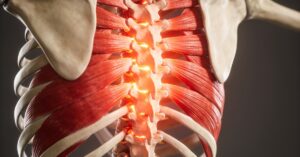
The Push Press Exercise functions as a comprehensive, full-body movement that relies on the coordinated activation of the anterior, lateral, and posterior deltoids, triceps brachii, and upper pectoralis major to move weight overhead. Beyond the upper body, the exercise heavily recruits the quadriceps, gluteus maximus, and the entire core complex—including the abs, obliques, and spinal erectors—to stabilise the spine under load. This multi-joint engagement ensures that force is generated from the ground up, protecting the smaller joints of the shoulder by distributing the mechanical stress throughout the larger muscle groups of the hips and legs. Understanding this anatomy is crucial for any athlete or health-conscious individual who prioritises longevity and injury prevention over mere ego lifting. When we consider the kinetic chain, we see that the push press is not just an upper-body move; it is a full-body synchronisation effort that demands focus and physical awareness.
Physiological Benefits Of The Push Press
This exercise provides unique physiological benefits by mimicking the kinetic chain used in functional movements like sprinting and jumping, while also serving as the foundational motion for the split jerk. By training the body to improve the explosive extension of the hips, knees, and ankle joints, the push press fosters a higher rate of force development compared to isolated movements. This explosive extension capacity is critical for maintaining functional mobility and power as one ages, providing a measurable advantage in both athletic settings and daily physical tasks. From a physiological standpoint, the ability to transfer momentum from the lower body to the upper body through the core is what defines functional strength. This specific Push Press Exercise protocol trains the nervous system to coordinate complex muscle firing patterns, which is a massive benefit for neuro-muscular health.
Executing the Push Press Exercise with Clinical Precision
To perform the push press with proper form, follow these steps to ensure you are moving the weight with maximum efficiency and minimal risk:
- Set the barbell in a rack at mid-chest height.
- Adopt a shoulder-width grip and rest the bar across the front deltoids.
- Dip your knees and hips straight down by 2–4 inches.
- Keep your heels flat on the ground during the dip.
- Drive upward explosively and press the bar until your arms reach full lockout.
Executing these steps requires a high level of mental focus; you must treat every repetition as a distinct event that demands perfect posture. The goal is to move the weight in a perfectly vertical line, as any deviation can put unnecessary stress on your lower back. By keeping your torso vertical, you ensure that the force from your legs goes directly into the barbell, rather than being dissipated by a forward lean. It is this attention to detail that separates the casual gym-goer from the individual who is truly committed to long-term health and athletic development. Remember, the dip phase is not a race—it is a controlled loading phase where you prepare your body to unleash power.
Common Push Press Mistakes and Errors to Avoid
Common push press mistakes often stem from poor technique that can lead to unnecessary strain on the lower back or shoulders. Ever wondered if your form is actually helping or hindering your progress? Review this comparison to see if your current technique is serving your health goals:
| Correct Technique | Common Mistake |
|---|---|
| Shallow quarter-squat | Deep squatting |
| Vertical torso | Chest dropping forward |
| Heels flat on floor | Weight on balls of feet |
| Leg drive precedes arm press | Early arm press |
Many people struggle with the dip phase because they instinctively want to squat down, but doing so forces the hips back and causes the chest to drop, which is a recipe for disaster when handling heavy loads. From my experience, correcting this is as simple as focusing on „sliding” the back down a wall rather than sitting down into a chair. When you keep your heels flat, you maintain a stable base that allows for a much more powerful leg drive. If you find yourself shifting onto the balls of your feet, it is usually a sign that your glutes are not fully engaged or that you are trying to push the weight with your arms too early. By identifying these patterns early, you can adjust your form before they turn into chronic issues that require medical intervention.
Critical Timing and Coordination Faults
A frequent error in the Push Press Exercise is pressing with the arms before the hips and knees are fully extended, which effectively kills the momentum generated by the lower body. You must ensure you do not stop the leg drive short before achieving full hip extension; the transition from the drive to the press must be seamless. By synchronising the leg drive with the upper body press, you maintain the intended intensity of the movement and prevent the arms from taking on an uneven load that could lead to shoulder impingement or wrist instability. This timing is the „secret sauce” of the movement—it is the difference between an efficient lift and a struggle. Many beginners feel like they are fighting the bar, but the goal is to make the bar feel weightless for a split second by using your lower body power effectively.
Strategic Programming for Push Press Workouts
The push press should be incorporated into your workout routine on designated Shoulder, Push, or Total-Body training days, ideally placed first or second in your session to ensure your central nervous system is fresh. From my experience as a lifter, treating this as a technical movement first and a strength movement second saves you from the frustration of stalled progress and nagging injuries. Use the following guide to tailor your volume:
- Absolute Strength: 4–5 sets of 3–5 reps (2–3 minutes rest).
- Power and Calorie Burning: 3–4 sets of 6–8 reps (60–90 seconds rest).
- Technical Development: 4–6 sets of 3 reps (light weight).
- Jerk Development: 5–7 sets of 2–3 reps (moderate-to-heavy load).
Important: Always ensure you are using 20–30% more weight than you would for a strict overhead press, as this is the standard benchmark for this specific press variation. Programming this exercise requires a balance between intensity and recovery, as the central nervous system demand is quite high. If you are training for raw strength, keep the reps low and the rest periods long to allow for full recovery between sets. Treat your training as a long-term investment in your health, and you will see the results manifest in your overall physical performance and daily energy levels.
Frequently Asked Questions
Can the push press replace the strict military press entirely?
While the push press is excellent for power, the strict press remains superior for pure shoulder hypertrophy and isolation. You should ideally cycle both movements into your programme to benefit from the unique stimulus provided by each variation.
How do I know if I am using enough weight for this movement?
You should aim to use approximately 20% to 30% more weight than your current strict overhead press capacity. If you cannot maintain a vertical torso with that load, reduce the weight until your technique is flawless, as safety must always come before ego.
Is it normal to feel soreness in the legs after this session?
Yes, it is entirely normal to experience delayed onset muscle soreness in your quadriceps and glutes because this movement relies heavily on lower-body drive. This indicates that you are correctly engaging the entire kinetic chain rather than relying solely on your upper body.
What footwear is best for performing this exercise safely?
Flat-soled shoes or dedicated weightlifting footwear are the best choices because they provide a stable foundation that prevents weight shifting during the dip. Avoid running shoes with cushioned heels, as the instability can lead to poor balance and potential ankle or knee strain.
Always prioritise maintaining a perfectly vertical torso during your dip to safely harness your lower body power without straining your spine. With consistent practice and attention to your form, you will find that this movement becomes an empowering, sustainable way to build both strength and athletic confidence.