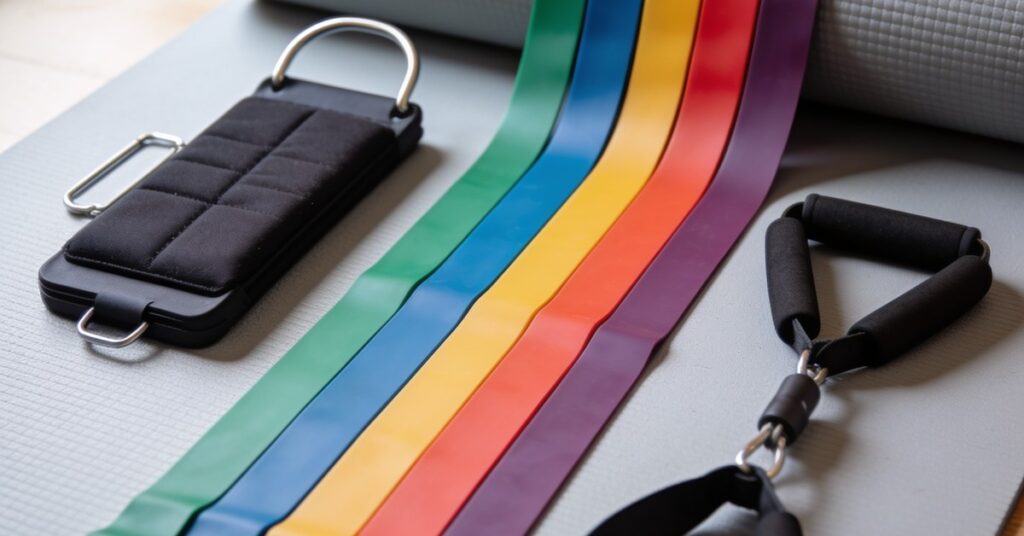
Integrating Resistance Bands Exercises For Beginners into your daily routine is a highly effective, low-impact strategy for improving functional strength and supporting long-term musculoskeletal health. In this article, you will learn how to safely select the right equipment, master essential movement patterns, and structure a sustainable home workout that prioritises injury prevention. By following these evidence-based guidelines, you will gain the confidence and practical knowledge needed to begin your fitness journey with precision and care, ensuring that your implementation of Resistance Bands Exercises For Beginners is both safe and highly productive.
Resistance bands exercises for beginners
Resistance bands are an excellent choice for novices looking to develop physical strength without the need for cumbersome free weights. It is recommended to commence your journey with a light-tension band, performing each movement for 10 to 12 repetitions. Core exercises to include are squats, bicep curls, lat pulldowns, and seated rows.
Effective 15-minute full-body routine
To maximise your health and minimise the risk of injury, it is beneficial to utilise versatile resistance bands. This routine is designed to enhance muscle tone, improve your range of motion, and promote overall wellness.
- Squats: Stand with your feet hip-width apart, ensuring the band is anchored securely under your feet. Hold the handles at shoulder height. Maintain an upright chest, engage your core, and sit back as though into a chair. Drive through your heels to return to a standing position, squeezing your glutes at the peak of the movement. This targets the quads, hamstrings, and glutes.
- Seated or Standing Rows: Sit or stand with your spine tall and legs extended or slightly flexed. Loop the band around your feet or anchor it to a solid structure. With arms stretched in front, pull your elbows back towards your ribs, squeezing your shoulder blades together. Slowly return to the initial position to work the upper back, lats, and biceps.
- Bicep Curls: Stand with feet shoulder-width apart, firmly in the middle of the tubing. With palms facing forward, keep your elbows tucked close to your torso and curl your hands towards your shoulders, then lower them under control to train the biceps.
- Chest Press: Loop the band behind your upper back, holding the ends in your hands. Starting with elbows at a 90-degree angle, push your hands straight forward, then slowly return to the starting position to engage the chest, anterior deltoids, and triceps.
- Lateral Walks: Place a mini-band just above your knees or around your ankles. Maintain a hip-width stance with slightly bent knees. Step slowly to the right, followed by the left, ensuring constant tension on the band throughout the movement.
Key guidelines for a successful workout
To ensure your session is both safe and effective, please adhere to the following principles:
- Maintain Control: Resistance is present in both directions. Avoid allowing the band to snap back; instead, govern the release during every repetition.
- Adjusting Intensity: To reduce difficulty, use a lighter band or increase the grip distance between your hands. To increase intensity, grip the band closer to shorten it or switch to a higher tension variety.
- Warm-up: Prior to commencing your main exercises, loosen your joints with gentle arm circles and neck rolls.
- Modification: If a movement feels too demanding, feel free to alternate sides or modify the depth of your motion to suit your current fitness level.
Focus on keeping your spine straight and your core engaged throughout these exercises. Consistent practice will help you build endurance, improve stability, and safely progress on your fitness journey.
Core Benefits Of Resistance Training And Resistance Band Exercises
Resistance Band Exercises provide a versatile, joint-friendly method for beginners to improve muscular endurance, increase bone density, and enhance metabolic health without the need for heavy, expensive gym equipment. By utilising elastic tension, these tools allow for a controlled, progressive overload that adapts to your individual fitness level, making them an ideal starting point for anyone looking to mitigate the effects of a sedentary lifestyle. Engaging in regular resistance training helps to stabilise joints, improve posture, and alleviate common aches associated with muscle weakness, serving as a foundational pillar for your overall physical well-being. When you choose to integrate Resistance Bands Exercises For Beginners into your weekly schedule, you are essentially investing in a portable, durable, and highly efficient toolset that bypasses the logistical hurdles of traditional gym environments. The beauty of this modality lies in its simplicity; it is a direct, no-nonsense approach to physical conditioning that respects your time while delivering measurable results.
How To Choose The Right Resistance And Best Resistance Band
Choosing the correct tension is the most critical step in ensuring both safety and efficacy, which is why you must learn how to Choose The Right Resistance, typically starting with a light-to-medium range between 5kg and 15kg. This initial resistance provides enough stimulus to trigger neuromuscular adaptation without placing undue stress on joints or connective tissues that may not yet be accustomed to load-bearing exercise. It is easy to assume that more tension equates to faster results, but in the realm of resistance training, form is the primary currency. By starting at a manageable resistance level, you allow your central nervous system to map the movement patterns correctly, which is the hallmark of a seasoned trainee. I have seen many individuals rush to the heaviest band available, only to sacrifice the quality of the contraction and increase the risk of tendonitis or other overuse injuries.
Tailoring Tension To Upper Body And Lower Body Muscle Groups
It is essential to match the band strength to the specific muscle group being trained to ensure proper recruitment and safety. The following table provides a quick reference for selecting the appropriate tension based on your target area:
| Muscle Group | Recommended Tension |
|---|---|
| Shoulders and Triceps | 5–10kg |
| Glutes and Thighs | 15–25kg+ |
To verify if you have the right fit, perform the 10-Rep Test with a tempo of 3 seconds up and 3 seconds down. If you cannot maintain this tempo, the band is too heavy. Furthermore, you should choose bands based on weight ratings rather than color codes, as manufacturer standards vary significantly. To scale the intensity during a session, you can increase tension by stepping wider during standing exercises or by choking up on the band to shorten its active length. Remember that your strength will fluctuate depending on your recovery, hydration, and overall stress levels, so do not hesitate to adjust your equipment selection on a day-to-day basis to ensure you are always training with intent rather than just going through the motions.
Foundational Full-Body Resistance Band Workout
Performing a Full-Body Resistance Band routine is the most efficient way for beginners to build foundational strength, which involves completing 3 sets of 10–15 repetitions per exercise with a 45-second rest period between sets. These movements are designed to be safe, accessible, and highly effective for muscle activation when performed with correct form and steady rhythm. By focusing on multi-joint patterns, you ensure that your body learns to function as a cohesive unit, which is vital for long-term health and injury prevention. Many of the exercises listed here are staples in professional physical therapy, chosen because they provide a stable, controlled environment for muscle growth while minimising the shear forces often associated with free weights or machines. Stick to the prescribed volume, as this will help you build a solid base of conditioning without overtaxing your recovery systems, which is a common pitfall for those just starting out.
Essential Resistance Band Exercises To Try For A Balanced Physique
The banded Squat is your primary movement, as it targets quads, glutes, core, and upper back, providing a comprehensive lower-body challenge. For upper-body development, the resistance band chest press and the resistance band chest fly both require anchoring the band at chest height to ensure optimal torque, while the seated row involves looping the band around the arches of the feet to pull the shoulders back and improve posture. Finally, the overhead press requires standing on the band with feet hip-width apart to ensure stability, and the Glute Bridge involves placing the band across the hips while lying on the floor to specifically isolate the posterior chain. These movements, when practiced with consistency, create a robust foundation that supports your daily activities and protects your joints from the wear and tear of modern living. Pay attention to the alignment of your knees and the engagement of your core throughout each repetition; keeping your torso upright and your spine neutral is essential for getting the most out of these exercises while keeping your back safe.
Designing Your 15-Minute Home Workout Routine
A consistent 15-minute Home Workout routine, performed 2–3 times per week, provides the necessary stimulus for physiological improvement without overwhelming a beginner’s recovery capacity. This routine should focus on performing 3 sets of 10–12 repetitions per exercise, with 30–60 seconds of rest between sets to allow for adequate oxygenation and muscle replenishment. The brevity of this routine is a feature, not a bug; it is designed to fit into your day without requiring a complete overhaul of your schedule. By keeping the duration short, you are more likely to remain consistent, which is the single most important variable in any health-related endeavour. I often tell my clients that a 15-minute workout they actually finish is infinitely better than a two-hour workout they skip because they felt overwhelmed.
Executing Foundational Techniques At Home
Success in your home workout depends on precise technique. From my own experience, I’ve found that keeping a simple workout log helps track progress and keeps me accountable on days when motivation is low. Follow these steps for optimal results:
- For the bent-over row, hinge forward at the hips to a 45° angle to protect your lumbar spine.
- For the banded Squat, descend to a 90° angle to maximise range of motion.
- Place the band around thighs just above the knees for squats to enhance glute engagement.
- Begin with a light or medium resistance band to master the form before moving to higher tensions.
Important: If you find your equipment lacking, remember that you can adjust intensity by wrapping the band around your hands to shorten it, and you can source further guidance from the British Heart Foundation, which provides a dedicated Band Workout Guide. Consistency is the engine of change, so treat your home space as a dedicated environment for your health; even a small corner of your living room can serve as an effective gym if you approach your training with the right mindset and discipline.
Safety Protocols And Preventing Common Training Errors
Preventing injury is paramount, so you must never stretch the band beyond 3 times its resting length, as this significantly increases the risk of snap-back and equipment failure. Always inspect bands for nicks or tears before every use, and replace damaged bands immediately to avoid sudden breakage during a set. These simple checks take less than a minute but can save you from a significant, avoidable injury. Many people view bands as indestructible, but they are subject to the same material fatigue as any other piece of equipment, particularly when exposed to sunlight, heat, or abrasive surfaces over extended periods. Maintaining your gear is a sign of a professional approach to your own health and safety, mirroring the care you would apply to any medical device or prescribed treatment.
Mastering Movement Quality And Environment
To protect your equipment and your body, use a yoga mat to prevent fraying on abrasive surfaces like concrete, and use a padded door anchor instead of looping bands over sharp metal doors. During your sessions, perform slow, controlled movements instead of rushing, and specifically control the eccentric (lowering) phase of the movement to maximise muscle fiber recruitment and tendon health. Finally, always incorporate dynamic stretches before and static stretches after workouts to improve blood flow and joint flexibility, ensuring your body is prepared for the effort and recovers efficiently afterward. This structured approach to training—where you prioritise the quality of the movement over the quantity of the load—is what will differentiate your results in the long term. Do not be tempted to use momentum to complete your repetitions; the tension of the band is your resistance, and it is most effective when you are the one in complete control of the resistance throughout the entire range of motion.
Frequently Asked Questions
How often should I clean my resistance bands?
You should wipe your bands down with a damp cloth and mild soap after every session to remove sweat and oils. Proper cleaning prevents the material from degrading prematurely and keeps your equipment hygienic for future use.
Can I use resistance bands if I have joint pain?
Yes, resistance bands often provide a lower-impact alternative to free weights, making them suitable for those managing joint discomfort. However, you should always consult with a medical professional or physical therapist to ensure the exercises are appropriate for your specific condition.
Are resistance bands effective for building muscle?
Resistance bands are highly effective for hypertrophy and strength gains because they provide constant tension throughout the entire range of motion. By progressively increasing the resistance or volume, you can stimulate significant muscle growth and functional improvement.
What is the difference between tube bands and loop bands?
Tube bands typically feature handles and are ideal for upper body movements like chest presses and rows, while loop bands are better suited for lower body exercises and glute activation. Many beginners find it beneficial to own a small variety of both to cover all foundational movement patterns.
Embarking on a resistance band training programme is a practical, evidence-based decision that can profoundly influence your long-term health and physical independence. By consistently prioritising controlled movement and proper equipment maintenance, you will build a resilient foundation that supports your body and well-being for years to come.