Navigating Female Catheterisation can feel daunting, but understanding the clinical process is a vital step in managing your health and recovery with confidence. In this guide, you will find evidence-based information on what to expect during the procedure, how to ensure your safety, and practical tips to minimise discomfort. My goal is to provide you with the clarity and professional insight needed to approach this aspect of your care with ease and peace of mind.
Female Catheterisation is a medical procedure where a sterile, flexible tube is inserted through the urethra into the bladder to drain urine, typically performed when a patient cannot empty their bladder naturally or requires precise monitoring of output. This essential clinical intervention is conducted by trained healthcare professionals under strict aseptic conditions to maintain patient safety and prevent complications.
Clinical Indications for Urinary Catheterisation and Bladder Management
Catheterisation is clinically indicated primarily to resolve acute or chronic urinary retention or to provide an accurate, real-time assessment of urine output during major surgery or critical shock states. It is also used to measure post-void residual volume, which helps clinicians evaluate how well the bladder is functioning on its own.
Beyond diagnostics, this procedure is vital for managing end-of-life care to ensure patient comfort, instilling specific medications directly into the bladder, or performing essential bladder irrigation. It may also facilitate the healing of stage III or IV sacral pressure ulcers by preventing the skin from being compromised by continual urinary leakage, or assist in bypassing obstructions caused by severe pelvic organ prolapse. Additionally, it remains the standard method for obtaining a sterile urine sample when other collection methods are insufficient.
Technical Requirements for Female Urinary Catheter Equipment
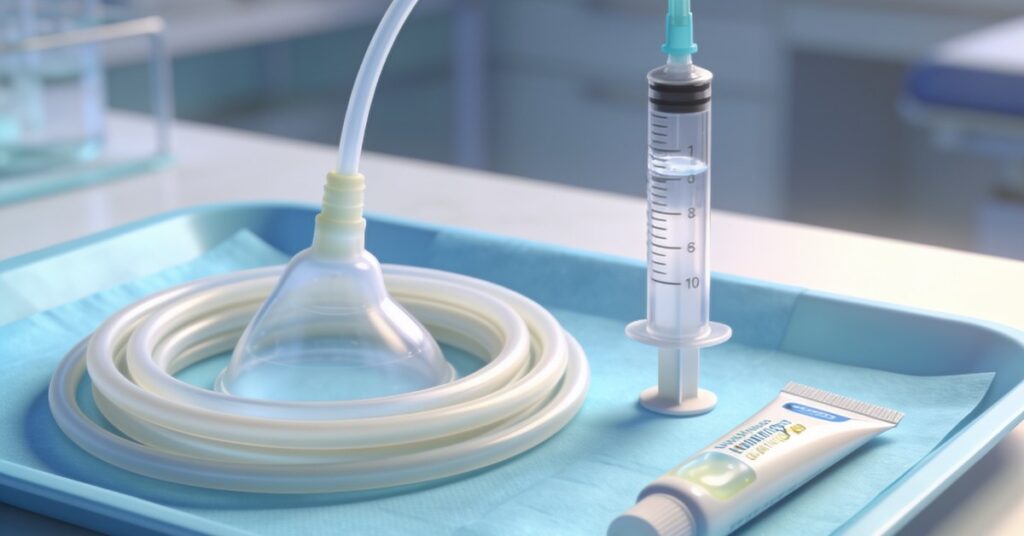
The standard equipment for Female Catheterisation involves specific sizing parameters to ensure clinical efficacy and patient safety. Ever wondered how these sizes are determined? The following table breaks down the common requirements you might encounter:
| Equipment Category | Standard Measurement |
|---|---|
| Female catheter length | 20–26 cm |
| Routine adult size | 10Fr to 14Fr |
| Specialised size (for clots) | 16Fr to 24Fr |
| Balloon inflation volume | 5–10 ml |
Note that 1 French (Fr) unit represents 1/3 mm in external diameter; for instance, a 12Fr catheter has an external diameter of 4 mm. The absolute maximum size used is 26 Ch, and for all adult procedures, the balloon inflation volume is strictly maintained between 5 ml and 10 ml of sterile water.
Step-by-Step Patient Preparation and Insert Technique
The insertion process requires precision and a calm approach. From my experience in health advocacy, I have found that knowing the exact steps helps patients remain much more relaxed during the procedure:
- Positioning: The patient is placed in a supine position with knees flexed and hips abducted for optimal access.
- Cleansing: The genital area and meatus are cleaned with antiseptic solution, always wiping from front to back to avoid contamination.
- Lubrication: Sterile anaesthetic gel is applied to ensure the insertion is as smooth as possible.
- Advancement: The catheter is inserted until urine flows, then advanced a further 5.0 cm to 7.5 cm.
- Inflation: The balloon is filled with sterile water and gently seated at the bladder neck.
- Securement: The tubing is fixed to the thigh to prevent accidental pulling.
Minimising Pain and Ensuring Comfort During Catheterisation
Patient comfort is best managed by combining physical relaxation techniques with proper clinical handling, such as applying topical lubricant to the catheter and using devices with polished eyelets to reduce urethral friction. Patients are encouraged to practise deep breathing and muscle relaxation exercises before the procedure begins to lower physical tension.
Ongoing comfort depends on maintaining the integrity of the drainage system, which includes checking the tubing regularly for kinks to ensure unobstructed drainage and keeping the drainage bag positioned below the level of the bladder. Furthermore, proper securement of the catheter to the skin is essential to prevent movement or „tugging” at the insertion site, while maintaining strict hygiene around that area further prevents irritation.
Infection Prevention and Daily Care for the Urinary Catheter
Preventing catheter-associated urinary tract infections is achieved by using sterile equipment and strictly maintaining a closed, sterile drainage system throughout the duration of use. The catheter should be removed immediately as soon as it is no longer clinically required to lower the risk of infection.
Daily maintenance involves cleaning the catheter tubing, the area around the catheter opening, and the rectal area with soap and water to keep the site free of bacteria. Clinicians should note that antibiotic prophylaxis is not routinely prescribed for either long-term or short-term catheterisation, as the focus remains on rigorous hygiene standards.
Contraindications and Safety Precautions for Patient Care
Absolute contraindications for catheterisation include patient refusal, known severe urethral strictures, the presence of blood at the urethral meatus, or suspected lower urinary tract trauma such as a pelvic fracture or perineal bruising. Any active urethral or meatal infection also serves as a contraindication unless the procedure is deemed medically unavoidable.
Important: Always use silicone or polyurethane catheters for patients with known latex allergies and ensure the catheter balloon is inflated only with sterile water to prevent crystal formation. To avoid urethral trauma, the catheter must be advanced to the bifurcation (Y-port) before inflation. All care must adhere to NICE guideline CG139, and if a patient lacks the capacity to consent, staff must strictly follow the Mental Capacity Act Policy.
Frequently Asked Questions
Is it possible to shower with a catheter in place?
Yes, you can shower with a catheter, provided you ensure the drainage bag remains lower than your bladder to prevent backflow. Always keep the insertion site clean and dry after showering to minimise the risk of infection.
How often should the drainage bag be emptied?
The bag should be emptied when it is approximately two-thirds full to prevent the weight of the urine from pulling on the catheter. Ensure you use a clean technique when handling the drainage tap to maintain sterility.
What does it mean if I see blood in the urine?
A small amount of blood may occasionally occur due to minor irritation from the catheter, but you should report any visible blood to your healthcare provider. Significant or persistent bleeding requires immediate clinical assessment to rule out trauma or infection.
Can I lead an active lifestyle while using a catheter?
Most patients can continue their normal daily activities, provided the catheter and tubing are securely fastened to their thigh. Avoid activities that involve heavy pulling on the tube, and always consult your doctor regarding specific physical limitations.
Adhering to strict aseptic techniques and daily hygiene protocols is your best defence against complications and discomfort. Remember that inflating the balloon exclusively with sterile water is a non-negotiable safety step to ensure your wellbeing throughout the process.