Many individuals seeking to improve their physical health often wonder if a consistent walking routine is enough to build significant muscle mass or if they need to adjust their strategy. In this article, you will learn the physiological realities of how walking affects muscle tissue, discover evidence-based methods to increase your training intensity, and find out how to effectively combine movement with resistance exercises to reach your goals safely. We are here to provide the clarity you need to make informed decisions about your fitness journey and long-term well-being.
Does walking build muscle mass
The physiological impact of walking on musculature
Walking is primarily an activity that enhances muscular endurance rather than inducing significant muscle hypertrophy. Whilst it is an excellent method for toning the quadriceps, hamstrings, gluteals, calves, and core muscles, standard flat-ground strolling lacks the substantial mechanical tension required to trigger significant muscle growth.
Can walking promote muscle growth?
The effectiveness of walking for muscle gain often depends on your current fitness level. For those who have been relatively sedentary, walking can provide enough stimulus to see initial improvements. However, to continue building size, you must introduce progressive overload, metabolic stress, and muscle fibre damage. Regular walking on its own will eventually plateau, as it fails to provide sufficient resistance.
Strategies to increase muscle engagement during walks
To transform a simple walk into a more effective muscle-building session, you should consider the following modifications:
- Traverse inclines and stairs: Walking uphill forces your posterior chain and leg muscles to overcome gravity, which increases the resistance significantly.
- Utilise external weights: Wearing a weighted vest or a heavy rucksack places additional load on your core and lower body.
- Integrate bodyweight exercises: Pause your walk every few minutes to perform sets of lunges, squats, push-ups, or high-knee marches to directly challenge your muscular strength.
- Commit to power walking: By increasing your speed and pumping your arms, you involve the upper body and elevate the overall metabolic requirements of the activity.
- Combine with resistance training: Evidence suggests that pairing walking with dedicated strength training is the most sustainable approach for maintaining and building muscle mass.
Which muscle groups are active during walking?
Walking is a functional movement that engages several key areas of the body. Proper form ensures that you are effectively utilising:
- Glutes: These are engaged during the stride, particularly when pushing off from the rear foot.
- Hamstrings and Quadriceps: These muscles facilitate the fluid movement of each step.
- Calves: These are essential for the propulsion phase of every stride.
- Core: Your abdominal muscles work to stabilise your torso throughout the duration of your exercise.
Optimising your routine for long-term health
Whilst walking is a superb, low-impact exercise for cardiovascular health, fat management, and joint mobility, viewing it as a standalone muscle-building tool is often insufficient. For those seeking significant physical transformations, incorporating strength training—such as lifting weights—alongside your daily walks is the most effective approach to ensure continuous progress and long-term functional fitness.
The Direct Answer: Does Walking Build Muscle Mass?
Walking alone does not provide sufficient mechanical tension or the specific stimulus required to induce significant muscle hypertrophy in healthy adults. While it is an excellent activity for promoting overall wellness, it primarily builds muscular endurance by repeatedly activating slow-twitch muscle fibres rather than the fast-twitch fibres responsible for visible muscle growth. The common query, does walking build muscle mass, is best answered by acknowledging that while it enhances tone, it does not act as a primary catalyst for substantial gains. If your primary health objective is to increase muscle, walking should be viewed as a foundational component of a broader exercise programme rather than a standalone solution.
Physiological Mechanisms: Does Walking Actually Build Muscle?
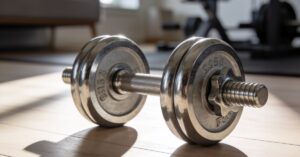
The difference between walking and weightlifting lies in the type of mechanical stress placed upon the muscle tissue, which dictates the body’s adaptive response. Weightlifting activates fast-twitch muscle fibres through progressive overload, a process necessary for muscle growth that walking simply cannot replicate. Exercise physiologists at the Hospital for Special Surgery confirm that walking lacks the continuous, high-intensity resistance required for significant hypertrophy. While a 2023 study in GeroScience highlights that walking is highly effective for increasing aerobic fitness, decreasing body fat, and reducing blood pressure in sedentary adults, it does not trigger the same anabolic pathways as dedicated resistance training. Understanding these mechanisms is vital, as when you ask yourself does walking build muscle mass, you must distinguish between the metabolic benefits of aerobic movement and the structural adaptation required for size increases.
| Factor | Walking | Weightlifting |
|---|---|---|
| Primary Adaptation | Muscular Endurance | Muscle Hypertrophy |
| Muscle Fibres | Slow-twitch | Fast-twitch |
| Resistance Level | Low / Gravity-based | High / Progressive |
Strategies to Increase The Intensity and Muscle Building
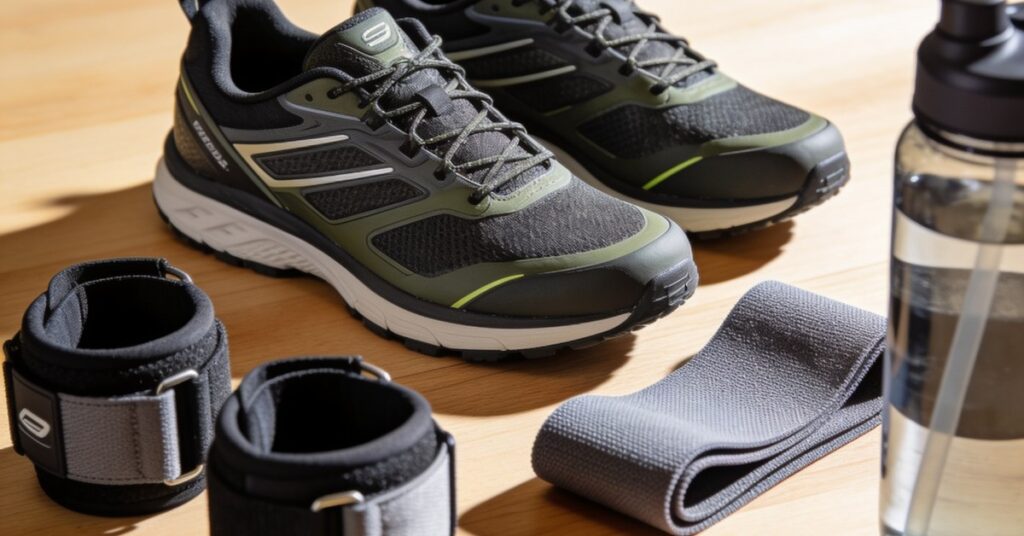
You can effectively increase the intensity of your walking workouts by incorporating specific tools and techniques that add external resistance to your movement. By transforming a casual walk into a more demanding session, you challenge your lower body and core muscles to work against greater forces, thereby creating a more favourable environment for muscle maintenance and minor growth. Ever wondered if there is a way to make your daily walk work as hard as you do? Consider these setup items to level up your routine:
- Weighted vest (to add torso resistance)
- Sturdy walking shoes (essential for joint support)
- Nordic walking poles (for upper body engagement)
- Lateral resistance bands (for glute activation)
- A backpack with weight plates or water bottles
Practical techniques for muscle building stimulus
Performing specific bodyweight exercises at regular intervals during your walk, such as 10 to 15 squats every five minutes, adds a necessary resistance training stimulus that walking alone lacks. You can also incorporate walking lunges to specifically target the quadriceps and glutes, or perform stair walking to drive up intensity and muscle recruitment. Increasing your walking pace or alternating between intervals of slow and brisk speeds further challenges your cardiovascular and muscular systems, while ensuring you consume adequate protein is vital to support the muscle repair and growth processes triggered by this increased workload. When you research does walking build muscle mass, you quickly find that the secret lies in how you manipulate the intensity of your session to force adaptation.
Muscle Building Considerations for Older Adults
For the elderly, walking serves as a critical intervention to preserve slow-twitch muscle fibres and improve overall functional mobility. A 2018 study published in the National Library of Medicine demonstrated that a 10-week walking programme significantly improves the quality of thigh muscles in inactive older individuals. Because approximately 30% of adults over the age of 70 face challenges with daily movements like climbing stairs or getting up from a chair, this preservation of muscle quality is essential for maintaining independence. While walking on an incline or maintaining a brisk pace provides a minor stimulus for growth, the most effective approach for seniors is to combine walking with two days of home-based resistance training per week, as NIA-supported researchers have advocated for decades.
Optimal Programming for Muscle Maintenance and Glutes
To successfully build muscle mass, you must follow a structured programme that includes strength training 3 to 5 days a week, focusing on an optimal hypertrophy rep range of 8 to 12 repetitions per exercise. Adhering to general physical activity guidelines of 150 minutes of moderate-intensity or 75 minutes of vigorous-intensity exercise per week is a great baseline, but you should also ensure you allow 48 to 72 hours of recovery time between training the same muscle groups. To support this, aim for a daily protein intake of 1.2 to 1.8 grams per kilogram of body weight to facilitate repair. From my experience, keeping a simple log of your training sessions helps maintain consistency and keeps you honest about your progress. Whether you are walking for health or performance, tracking your metrics ensures you are actually providing the stimulus your body needs to change.
Remember: Always consult your GP before starting a new, high-intensity exercise regimen, especially if you have pre-existing cardiovascular concerns or joint issues.
Targeting Glutes and Calves to Actually Build Muscle
Walking naturally engages the quadriceps, hamstrings, glutes, and calves, contributing to muscle tone through repetitive motion and resistance against gravity. The Gluteus maximus is particularly active during the gait cycle, and you can further maximise this by walking up hills, climbing flights of stairs, or using lateral resistance bands around your ankles to increase glute activation. While these movements stimulate more muscle growth in sedentary individuals compared to those who already exercise regularly, the key to further gains is to consistently increase the intensity, pace, frequency, and total resistance of your sessions. Follow these steps to maximize leg engagement:
- Find a route with a consistent incline or a set of stairs.
- Maintain an upright posture to engage your core and glutes.
- Take longer, deliberate strides to increase the range of motion.
- Add ankle weights or resistance bands for constant tension.
- Focus on the „push” phase of each step to activate the calf muscles.
Conclusion
While walking is an essential foundation for your long-term health, remember that incorporating external resistance is the key to turning your daily movement into meaningful muscle growth. Stay consistent with your efforts, but listen to your body and give it the recovery time it needs to thrive.
Frequently Asked Questions
Can walking on an incline significantly change muscle mass?
Walking on an incline increases the mechanical demand on your glutes and quadriceps, which is far more effective for muscle stimulation than flat-ground walking. While it is a great way to increase the intensity of your sessions, it should still be paired with resistance training for optimal hypertrophy.
Is protein supplementation necessary for walking-based muscle building?
Yes, consuming 1.2 to 1.8 grams of protein per kilogram of body weight daily is crucial for repairing the muscle fibres stressed during your walks. Without adequate protein, your body cannot efficiently synthesise the new muscle tissue required to increase muscle mass.
How often should I perform bodyweight exercises during a walk?
You should aim to perform two to three sets of 15 bodyweight squats or lunges every five minutes to effectively add a muscle-building stimulus to your routine. This intermittent approach helps to bridge the gap between simple aerobic walking and more intensive resistance training.
Why does walking help older adults more than younger active individuals?
Walking provides a significant new stimulus for previously inactive or sedentary seniors, leading to measurable improvements in thigh muscle quality. For younger, more active individuals, the body is already adapted to higher loads, so standard walking alone often fails to trigger further muscle growth.