
Establishing a consistent exercise routine is one of the most effective ways to improve your long-term cardiovascular health, functional mobility, and overall physical resilience. In this guide, I will provide you with a medically sound, evidence-based roadmap for how to start calisthenics, ensuring you understand exactly how to structure your workouts and safely progress your training. By following these professional insights, you will gain the confidence to build strength effectively while minimising the risk of injury during your fitness journey.
The Fundamental Approach to Beginner Calisthenics Training
To begin your journey into calisthenics, you should commit to training three times a week for 20 to 30 minutes per session, focusing on a consistent beginner circuit. This frequency is optimal for allowing your muscles and connective tissues sufficient time to adapt to the new mechanical stress without risking overtraining or burnout. By keeping sessions brief initially, you ensure that you can maintain the high level of focus required to master correct movement patterns before increasing the complexity of your routine. Learning how to start calisthenics correctly is the difference between building a sustainable habit and suffering from avoidable setbacks during your first month of training.
Essential Equipment for Home Workouts and Calisthenics Exercises
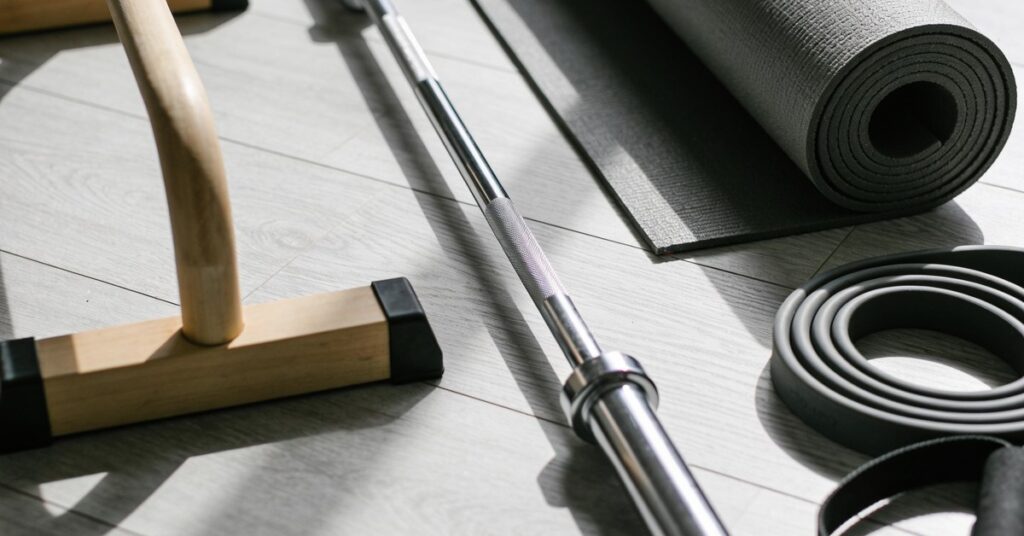
While calisthenics is fundamentally a free practice, acquiring a few specific items can significantly enhance your ability to perform exercises safely and effectively at home. I’ve found that having a dedicated space with the right gear keeps me from making excuses on those days when motivation is low. Many beginners assume that complex machinery is required for muscle growth, but in reality, your body weight combined with basic tools is more than enough to stimulate significant physiological adaptations. My own experience suggests that keeping these items visible in your living area serves as a constant, positive reminder of your health goals, effectively removing the mental friction associated with starting a new workout session.
- Pull-up bar: Doorway-mounted units like the Iron Gym are essential for upper-body pulling.
- Resistance bands: Continuous loops are perfect for assisted pull-ups or adding tension.
- Parallettes: Wooden versions help keep your wrists neutral during push-ups and dips.
- Yoga mat: Provides the necessary grip and cushioning for floor-based core work.
- Liquid chalk: A game-changer for maintaining a secure grip during high-repetition sets.
Structuring Your Beginner Calisthenics Workout Plan
A well-structured beginner calisthenics workout plan involves performing three rounds of a curated circuit three days per week, with a full day of rest between sessions to promote optimal recovery. Your primary objective during these sessions is to master the mechanics of foundational movements, ensuring that your nervous system learns to coordinate muscle groups efficiently. By adhering to a rest period of 60 to 90 seconds between sets, you allow your heart rate to normalise and your phosphagen energy stores to replenish, which is vital for maintaining high performance throughout the entire workout. Mastering the biomechanics of how to start calisthenics involves respecting these rest intervals, as they prevent the accumulation of excessive fatigue that often compromises form during later sets.
| Exercise | Target Reps/Time |
|---|---|
| Knee Push-Ups | 8–12 reps |
| Inverted Rows | 5–8 reps |
| Bodyweight Squats | 15–20 reps |
| Tricep Dips | 8–10 reps |
| Planks | 30–45 seconds |
Strategies for Progressive Overload and Calisthenics Progression
Important: Never sacrifice your form for extra repetitions, as technical breakdown is the fastest route to a joint injury. Progressive overload is achieved by mastering 15 to 20 repetitions of a specific exercise variation before moving on to a more demanding version. To maximise the efficacy of these repetitions, utilise a controlled tempo consisting of 3 to 4 seconds for the eccentric phase—where you are lowering your body—and 1 second for the concentric phase, where you are exerting force. This deliberate pace ensures that your muscle fibres are subjected to sufficient mechanical tension, which is the primary driver of strength and hypertrophy in a bodyweight-only environment.
- Master the basics (e.g., standard push-ups) until you hit 15-20 clean reps.
- Introduce a more difficult variation (e.g., decline push-ups).
- Focus on a slow, controlled eccentric tempo to increase time under tension.
- Track your sets and reps in a journal to ensure you are consistently improving.
Calisthenics Versus Weight Training and Hybrid Calisthenics
Calisthenics offers a distinct health advantage over weight training through its emphasis on functional body control, core strength, and balance, often resulting in a higher total calorie burn during movement. Ever wondered if there is a more efficient way to build a functional physique without the monthly gym fee? While weight training is excellent for muscle isolation and tracking exact progress through precise control over resistance levels, it typically requires a gym membership or significant investment in dumbbells and machines. In contrast, training without equipment is virtually cost-free, as it relies primarily on your own body mass and accessible infrastructure like floor space or local park bars. This accessibility makes it a superior choice for those who value mobility and the ability to train anywhere, without being tethered to a specific facility or expensive hardware.
How to Get Stronger with a Sustainable Calisthenics Training Schedule
A sustainable calisthenics training schedule should involve 3 to 4 days of activity per week, with each session comprising 4 to 6 exercises performed for 3 to 5 sets of 8 to 12 repetitions. If you prefer a full-body approach, schedule three 45-minute sessions on non-consecutive days, such as Monday, Wednesday, and Friday, to ensure a full day of recovery between workouts. Alternatively, a 4-day split—such as Monday and Thursday for „Push” movements and Tuesday and Friday for „Pull” movements—can be highly effective for those looking to increase their training volume and focus on specific muscle groups. Many individuals find that keeping a simple workout log helps them track their progress, ensuring that each week they are slightly stronger than the last. This analytical approach to training is what separates those who dabble in fitness from those who actually achieve lasting physiological changes in their health and body composition.
Benefits of Calisthenics and Improving Form for Beginners Starting Out
Improving your form and technique in calisthenics begins with a mandatory five-to-ten-minute warm-up, which prepares your joints and increases blood flow to the muscles. When you are just starting out, you must prioritise the quality of your movement over the total number of repetitions or sets, as poor form at this stage can lead to unnecessary strain or repetitive use injuries. Focus on performing 3 to 5 high-quality repetitions initially to build a solid foundation, ensuring your core remains engaged and your joints move through a full, safe range of motion. To keep your training diverse and effective, integrate movements such as chin-ups, jump squats, crunches, burpees, and jump rope into your circuit. By gradually building up your repetitions and sets, you allow your tendons and ligaments—which adapt slower than muscle tissue—to strengthen alongside your frame. This cautious, methodical approach to increasing intensity is the hallmark of an experienced practitioner and will serve as your best defence against the common pitfalls of over-eager training.
Remember: Always listen to your body; if you feel sharp pain, stop immediately and regress to an easier version of the movement. Consistency beats intensity every time, so keep your ego in check and focus on the quality of every single rep.
Frequently Asked Questions
How long does it take to see results from calisthenics?
Most beginners will start to notice improvements in muscular endurance and body composition within four to six weeks of consistent training. Significant strength gains typically require three to six months of dedicated, progressive practice.
Can I combine calisthenics with other forms of exercise?
Yes, adopting a hybrid calisthenics approach by blending bodyweight movements with cardiovascular activities like running or swimming is highly beneficial for overall health. This combination improves both your functional strength and your aerobic capacity simultaneously.
Is it necessary to train to failure in every session?
It is generally not recommended to train to absolute failure, especially as a beginner, as this can lead to excessive central nervous system fatigue. Instead, aim to stop each set one or two repetitions short of failure to maintain perfect form and ensure recovery.
What should I do if I have limited time for a workout?
When time is scarce, focus on a high-intensity circuit that targets multiple muscle groups, such as burpees, squats, and push-ups. Even a 15-minute session performed with high focus can provide a potent stimulus for maintaining your progress.
Prioritising perfect technique over repetition count ensures your long-term success while keeping your joints healthy and resilient. Remember that consistency is your greatest asset, so listen to your body and enjoy the steady process of building a stronger, more capable version of yourself.