
Maintaining optimal potassium levels is a fundamental pillar of cardiovascular health and daily vitality, yet navigating the balance between sufficient intake and medical safety can often feel overwhelming. In this guide, I will provide you with evidence-based insights into the most effective potassium-rich foods, helping you understand how to manage your requirements safely and confidently. By following these practical recommendations, you will be well-equipped to make informed dietary choices that support your long-term wellness and ensure you are getting enough potassium to thrive.
A high-quality strategy for including potassium-rich foods is an essential dietary component that supports vital physiological functions, including the regulation of heart rhythm, muscle contraction, and the transmission of nerve signals. By ensuring your intake aligns with established NHS guidelines, you can actively protect your cardiovascular system and maintain healthy intracellular fluid volume. Ever wondered if there is a simpler way to track how much potassium you are consuming without obsessing over every single milligram?
Potassium-rich food
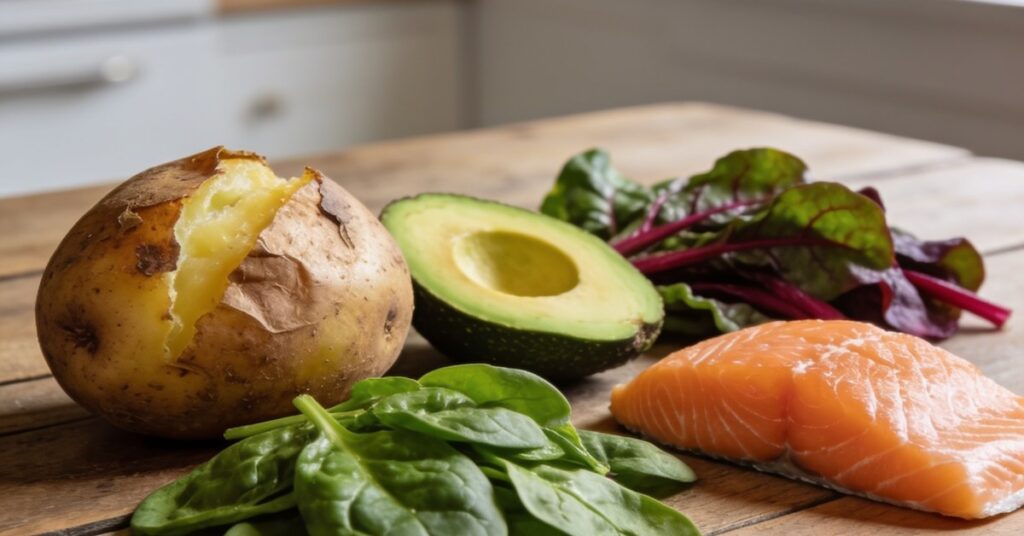
Potassium serves as a vital mineral essential for orchestrating fluid equilibrium, transmitting nerve impulses, and facilitating muscle contractions within the human body. To enhance your daily consumption, focus on integrating plant-based ingredients such as jacket potatoes (retaining the skin), sweet potatoes, spinach, and avocados into your meals. Furthermore, nutrient-dense options include bananas, dried apricots, pulses such as white beans, oily fish like salmon, and natural yoghurt.
Key dietary sources and their values
Below is a summary of various foods abundant in potassium, detailing the approximate amounts provided per standard serving size:
- Cooked beet greens: approximately 1,309 mg per cup
- Cooked spinach: approximately 840 mg per cup
- Baked jacket potato (with skin): approximately 926 mg per medium potato
- Baked sweet potato: approximately 542 mg per medium potato
- Dried apricots: approximately 1,160 mg per 100 g
- Avocado: approximately 583 mg per half-cup
- Banana: approximately 422 mg per medium fruit
- Cantaloupe melon: approximately 368 mg per quarter-melon
- White beans: approximately 500 mg per half-cup
- Lentils: approximately 365 mg per half-cup
- Wild Atlantic salmon: approximately 534 mg per 3-ounce portion
- Potted low-fat yoghurt: approximately 531 mg per cup
The physiological role of potassium
Potassium is intrinsically linked to fundamental biological processes. As a primary electrolyte, it is instrumental in upholding proper hydration and fluid balance throughout the body. Moreover, it is crucial for ensuring that the nervous system effectively relays signals between the brain and various peripheral tissues, supporting optimal motor and sensory function.
Considerations for your diet
While a wide variety of foodstuffs naturally contain potassium, fruits and vegetables consistently rank as the most concentrated sources. Adopting a lifestyle that includes regular consumption of legumes—such as peas, beans, and lentils—is a highly effective strategy for meeting your nutritional requirements. However, if you suffer from chronic kidney conditions or are currently prescribed specific medications, it is imperative that you consult with a healthcare professional regarding the monitoring or potential restriction of your potassium intake.
Why Your Body Needs Optimal Potassium Intake For Heart Health
Potassium is an essential mineral that serves as a cornerstone for systemic health by enabling your kidneys to effectively remove excess sodium from your bloodstream. This process is crucial for fluid balance, as potassium helps maintain the volume of fluid within your cells, which in turn supports stable blood pressure and overall hydration. The mineral also plays a protective role by reducing the amount of calcium lost during urination, which helps to protect your bones and maintain metabolic stability.
Beyond fluid regulation, this electrolyte is fundamental to the electrical activity of your body, as it is required for the consistent transmission of nerve signals and the rhythmic beating of your heart. When your muscles contract and relax, they rely on adequate potassium stores to function without fatigue or dysfunction. Given that higher dietary intake is scientifically linked to a lower risk of stroke and cardiovascular disease, prioritizing these foods is a proactive step in managing your long-term heart health. Because potassium also works with sodium to maintain the integrity of your blood vessel walls, ensuring your potassium level remains stable is vital for long-term vascular protection.
Determining How Much Potassium Do You Need In Your Dietary Potassium Plan
The daily amount of potassium you need is determined by your gender, life stage, and specific health conditions, with health authorities generally suggesting intake levels between 2,600 mg and 5,000 mg. While the British Dietetic Association sets a standard recommendation of 3,500 mg of potassium per day to maintain basic health, your personal requirements may shift based on your physiological needs or medical history. Understanding the daily potassium requirement is the first step toward a healthier lifestyle.
Recommended Daily Intakes For Getting Enough Potassium
| Demographic | Daily Target (mg) |
|---|---|
| Adult Men | 3,400 |
| Adult Women (19+) | 2,600 |
| Pregnant/Breastfeeding | 2,900 – 3,200 |
| Heart Health Focus (AHA) | 3,500 – 5,000 |
| People with Kidney Disease | 2,000 – 4,000 |
Most individuals struggle to reach the recommended mg of potassium per day because modern diets are often low in sodium but high in sugar, which can mask the need for nutrient-dense whole foods. If you are wondering how much potassium do you need, consider that your body needs a steady supply to function optimally. People with kidney disease must be particularly careful, as their ability to filter excess minerals is impaired, making it necessary to monitor every milligram of potassium consumed throughout the day.
Identifying The Amount Of Potassium And Signs Of Deficiency
Potassium deficiency, or hypokalaemia, is primarily recognised through persistent muscle weakness, unexplained cramps, and involuntary spasms that can disrupt your daily activities. These physical symptoms occur because your muscles and nerves rely on precise electrical gradients that are compromised when the level of potassium in your blood drops below the functional range, leading to a noticeable loss of physical stamina and coordination.
Cardiac and systemic signs are equally critical indicators that your body is struggling to maintain balance, often manifesting as heart palpitations or an irregular heartbeat (arrhythmia). You might also experience paraesthesia, described as a tingling or numbing sensation in your extremities, alongside chronic fatigue and exhaustion. Furthermore, digestive and urinary changes such as persistent constipation, increased thirst (polydipsia), and the need to urinate frequently during the night (nocturia) are common red flags. If you notice these symptoms, it is essential to consult a professional to check your potassium level before assuming your diet is the sole culprit.
Best Source Of Potassium And Foods High In Potassium
The most effective way to boost your potassium intake is to incorporate nutrient-dense whole foods into your daily meals, with cooked beet greens leading the list as a top potassium-rich food. Choosing these natural sources allows you to reach your targets through a varied, whole-food diet that provides plenty of potassium-rich foods alongside other essential vitamins and minerals. Whether you are preparing a fresh salad or hearty soups, there are many easy ways to increase your potassium intake.
- Cooked beet greens: 1,309 mg per cup
- Swiss chard: 961 mg per cooked cup
- Baked potato (with skin): 926 mg per medium potato
- Acorn squash: 896 mg per cooked cup
- Spinach: 840 mg per cooked cup
- White beans: 594 mg per half-cup
- Avocado: 583 mg per half-cup
- Salmon: ~450 mg per 100g
When looking for good sources of potassium, do not overlook the humble potato, especially when eaten with the skin intact, as the skin contains a significant amount of the mineral. Similarly, fruits like the banana, apricot, and dried fruit such as the prune or raisin are excellent for a quick boost. For those who enjoy savoury dishes, a lentil-based casserole or a meal featuring soybean can serve as a substantial source of potassium per serving. Even coconut water contains beneficial electrolytes, making it a refreshing option to help increase your potassium.
Managing Dietary High Potassium Foods For Kidney Health
Managing high blood pressure through diet involves selecting foods that provide high levels of potassium while maintaining a balanced approach to sodium reduction. A medium sweet potato, for example, provides about 540 mg of the mineral, making it a staple for those looking to lower your blood pressure through consistent dietary habits. By integrating these specific foods as part of a balanced diet, you create an environment where your cardiovascular system can function under less pressure.
Dealing with these dietary restrictions can be frustrating, but from my experience, keeping a simple food diary for one week helped me identify exactly which high-potassium foods fit best into my routine without causing stress. It is worth noting that tomato paste and other concentrated vegetable products are extremely rich in potassium. If you are following a specific renal protocol, remember that reference materials such as the Hull University Teaching Hospitals NHS Trust guide (HEY1435/2024) provide essential frameworks for maintaining safe levels for people with kidney disease.
Safety Precautions When You Increase Your Potassium Intake
Excessive intake of potassium can lead to a dangerous condition known as hyperkalaemia, which occurs when blood levels of the mineral become abnormally high. While it is difficult to reach toxic levels through a standard diet alone, the risks increase significantly if you use high-dose potassium supplements, which are a frequent cause of hyperkalaemia in those without underlying kidney issues. It is always safer to rely on whole foods like fruits and veggies rather than concentrated supplements.
You must also be aware of potential interactions with medications, as drugs like ACE inhibitors and potassium-sparing diuretics can cause your body to retain the mineral, inadvertently raising your levels. Furthermore, avoid the frequent use of salt substitutes, as many are formulated with potassium chloride, which can drastically increase your daily consumption. Because symptoms of an imbalance are often non-specific, a blood test remains the only reliable way to measure your clinical potassium levels and ensure your dietary choices remain within a safe range.
Important: If you are taking medication for heart conditions, never start a high-potassium supplement regimen without consulting your GP, as the risk of dangerous drug-mineral interactions is significant. Always aim for a variety of sources, including beef and turkey, to ensure you are getting enough potassium without relying on any single food item.
Frequently Asked Questions
Are there specific cooking methods that reduce the potassium content in vegetables?
Yes, boiling vegetables in a large amount of water and discarding the liquid can significantly reduce the mineral content. This technique, often called leaching, is frequently recommended for individuals who need to strictly limit their dietary potassium for medical reasons to reduce the risk of high blood pressure complications.
Can drinking fruit juices significantly affect my daily potassium balance?
Fruit juices are highly concentrated sources of potassium and can easily push your daily intake over recommended limits if consumed in large quantities. It is generally better to eat whole fruits, which provide fibre and a more controlled release of nutrients, helping to maintain a stable potassium level.
Do salt substitutes pose a risk even if I am not on medication?
Salt substitutes often contain potassium chloride and can cause dangerous spikes in blood levels, even in people without pre-existing kidney conditions. It is safer to use herbs, spices, or lemon juice to flavour your meals rather than relying on chemical substitutes that contain concentrated amounts of the mineral.
Is it possible to have low potassium levels despite eating a healthy diet?
Yes, certain conditions like chronic diarrhoea, excessive sweating, or the use of specific medications can deplete your stores faster than you can replenish them through food. If you experience persistent symptoms, seek a professional diagnosis rather than assuming your diet is the sole cause, as your body needs a precise balance to function.
Focusing on a balanced, whole-food approach to your diet is the most effective and safest way to support your heart and muscle health every single day. Always remember that professional medical monitoring through blood tests remains your best tool for ensuring your levels stay within a safe and healthy range.