
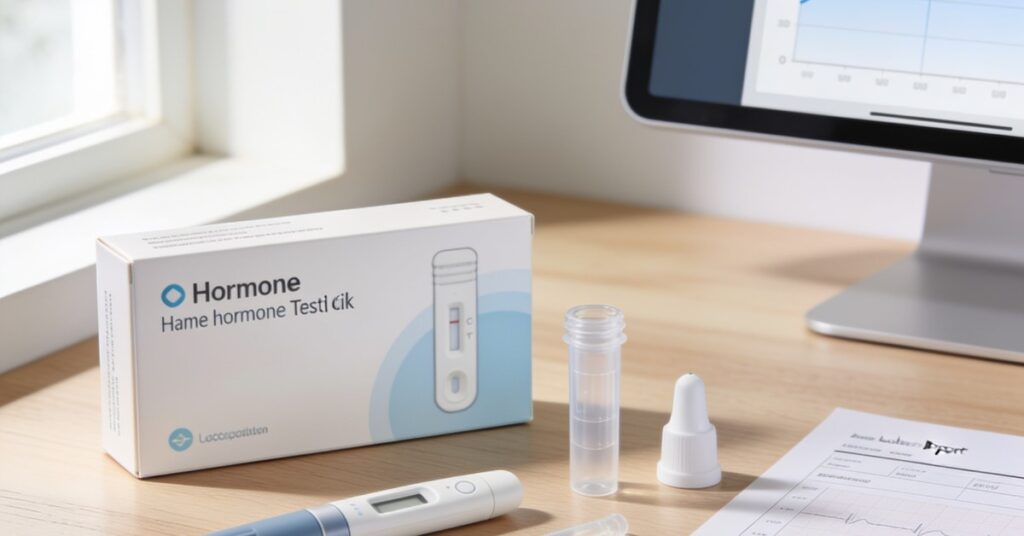
Monitoring your testosterone level is a significant step in taking control of your long-term vitality, yet navigating the convenience of an at-home testosterone test can often feel overwhelming. Testosterone is a hormone that plays a critical role in your daily well-being, influencing everything from energy metabolism to the production of red blood cells and sperm. In this comprehensive guide, I will provide you with evidence-based insights into the accuracy of these kits, how to perform the test correctly to avoid common pitfalls, and when it is essential to seek professional medical advice. By understanding the limitations, the science of how testosterone is produced, and the protocols of home diagnostics, you can make informed decisions that effectively support your health and well-being.
The Bottom Line on At-Home Testosterone Test Accuracy
An at-home testosterone test is best viewed as a preliminary screening tool rather than a definitive diagnostic instrument, as no kit can officially diagnose complex medical conditions like hypogonadism or confirm a clinical testosterone deficiency. While these kits offer a convenient way to check your testosterone levels without an immediate GP referral, they are prone to significant variability and should always be followed by clinical validation if results appear abnormal. Ultimately, these tests provide a snapshot of your hormonal health, but they lack the comprehensive diagnostic power of a clinical physical examination and a formal, two-part blood assessment conducted in a controlled laboratory setting. When you choose to test online, you are engaging in a process that requires strict adherence to timing and hygiene to ensure that the amount of testosterone detected is a true reflection of your physiological state.
Understanding the Reliability of a Home Blood Test Kit
The accuracy of an at-home testosterone test is inherently limited by the collection method, with finger-prick blood samples often showing a result deviation of 194% in men and 67% in women when compared to gold-standard clinical venous blood draws. Because these devices are sensitive to user technique, they are significantly less precise than the controlled, professional phlebotomy performed in clinical settings. Furthermore, while many kits are processed in CLIA-certified laboratories or facilities with equivalent regulatory accreditation, the inherent variability of capillary blood collection remains a primary concern for medical professionals who require data stability for long-term health monitoring. It is essential to remember that even a high-quality blood test kit cannot account for the stress or environmental factors that may occur when you collect your sample outside of a clinical environment.
| Feature | At-Home Finger-Prick | Clinical Venous Draw |
|---|---|---|
| Accuracy | Moderate (High variability) | High (Gold standard) |
| Convenience | Very High | Low (Requires appointment) |
| Diagnostic Status | Screening only | Clinical diagnosis |
Why a Blood Test Outperforms Saliva Kits for Free Testosterone
Blood-based tests are far more accurate than saliva tests because the latter only measure free testosterone, which is highly unstable and easily influenced by recent food or drink intake. Saliva-based kits fail to provide a complete picture of your total and free testosterone levels, making them an unreliable choice for those seeking a serious assessment of their endocrine function. For any meaningful health data, you should always prioritise kits that utilise blood samples over saliva-based alternatives, as blood provides a more stable matrix for hormone quantification. Testosterone is a sex hormone that binds to testosterone-carrying proteins in your bloodstream, and only a professional blood test can accurately differentiate between the bound and unbound fractions to give you a clear picture of whether your testosterone levels are low.
How to Test Your Testosterone Levels at Home
Ever wondered if there’s a way to make the process smoother? From my experience, preparing your body beforehand is the difference between a successful sample and a wasted kit. To ensure your sample is as viable as possible, follow these steps:
- Avoid alcohol, fatty meals, and vigorous exercise for 12 hours prior to the test.
- Warm your hands under a shower or with warm water to expand blood vessels in the fingers.
- Prick the side of the fingertip using the lancet provided in your collection kit.
- Allow the blood to drip naturally into the tube; avoid excessive squeezing, which can introduce contaminants.
Logistics and Availability of the Testosterone Test Kit
You can buy testosterone test kit options without a prescription from reputable providers such as Boots, Medichecks, Superdrug, and LloydsPharmacy. Once you have managed to collect a small blood sample, you must mail it to the laboratory immediately for processing to ensure sample integrity. Depending on the provider you choose, you can expect to receive your results within 1 to 5 working days, though logistics can vary based on local postal services and the specific laboratory turnaround times. It is worth noting that for many men, the comfort of your own home makes the process less intimidating, but you must remain diligent about the mailing process to ensure your blood test results are not compromised by temperature or delays.
Interpreting Total and Free Testosterone Results
Your results are most accurate when your small blood sample is collected between 6:00 a.m. and 10:00 a.m., as this aligns with the natural circadian peak of testosterone production in the body. A normal testosterone level for men is typically defined as 300 to 1,000 ng/dL (10.4 to 35.0 nmol/L), while for women, the normal range is 15 to 70 ng/dL (0.5 to 2.4 nmol/L). It is important to remember that these ranges represent total testosterone, which includes all hormone present in the blood, as opposed to free testosterone, which only measures the unattached, biologically active portion. When you measure your total testosterone, you are gaining insight into the overall capacity of your body to produce this vital substance, which is essential for maintaining muscle mass and metabolic health.
Important: Residue from testosterone replacement therapy gels on your fingertips can cause a significant false elevation in results; always wash your hands thoroughly before testing to avoid contamination of the blood sample at home.
Common Causes for Abnormal Testosterone Levels in Men and Women
Abnormal results can be misleading if you do not account for external contaminants or physiological factors. High results in men may indicate potential issues with the testicles, adrenal glands, or the use of anabolic steroids, while high readings in women are frequently associated with Polycystic Ovary Syndrome (PCOS). Always view a single abnormal result with caution, as medical guidelines generally require two separate, abnormal findings to trigger a formal clinical assessment, ensuring that any treatment plan is based on consistent, verified data. If your serum testosterone levels are consistently outside the normal levels of testosterone, your physician will evaluate whether you need to start testosterone replacement therapy or simply adjust your lifestyle to naturally boost levels of testosterone.
When to Consider a Testosterone Test and Seek Medical Advice
You should consult a GP or a qualified medical specialist if your at-home testosterone test results are abnormal, borderline, or if you continue to experience low testosterone symptoms despite receiving a normal test report. The NHS and most private clinics require two separate, early-morning laboratory blood draws to confirm a diagnosis. If you feel a clinical need for further investigation, consider these options:
- Contact your registered GP for an NHS blood test if you suspect your testosterone levels are low.
- Use private providers like One Day Tests or Randox Health for clinical blood draws without a GP referral to monitor your testosterone levels.
Recognising Symptoms of Low Testosterone
Seek medical advice immediately if you are experiencing persistent symptoms. Keep a simple symptom diary to track these changes, as it provides your doctor with valuable data during your consultation to determine whether your testosterone levels are the root cause of your fatigue or mood disruptions:
- Men: Erectile dysfunction, reduced sex drive, loss of body hair, or decreased muscle mass.
- Women: Irregular periods, excess facial or body hair, or severe acne.
- General: Unexplained persistent fatigue, weight gain, or mood swings.
Frequently Asked Questions
Can an at-home test replace a clinical diagnosis for testosterone therapy?
No, an at-home kit cannot replace a clinical diagnosis, as it is only a screening tool. A doctor must perform a physical examination and interpret two separate laboratory blood draws before prescribing any form of testosterone treatment.
Do I need to fast before using my home test kit?
While you do not need to fast in the traditional sense, you must avoid alcohol, fatty meals, and vigorous exercise for 12 hours before collecting your sample. These factors can significantly influence your testosterone in your blood readings and lead to inaccurate data.
What if my results indicate high testosterone levels?
High results may suggest underlying issues such as adrenal or testicular irregularities, or the use of exogenous substances. You should present these findings to a GP who can investigate further with follow-up clinical tests to see if your total testosterone level is truly elevated.
Are the results of an at-home test kept confidential?
Yes, reputable testing providers operate under strict data protection regulations to ensure your medical information remains private. Your results are typically delivered via a secure patient portal, accessible only to you, providing a safe way to check your testosterone levels.
Always prioritise consistency by collecting your blood sample in the early morning hours to align with your body’s natural hormonal peak. Treat these test results as a helpful starting point, but lean on a healthcare professional to provide the clarity and support you deserve for your long-term wellness.