Navigating the nuances of a Positive Covid Test Picture can be an overwhelming experience, making it essential to understand both the medical implications and the digital safety risks associated with documenting your status. In this guide, I will provide you with evidence-based insights on how to accurately interpret your test, document it responsibly, and safeguard your personal data from common online scams. By following these professional recommendations, you can manage your health situation with clarity, confidence, and complete peace of mind.
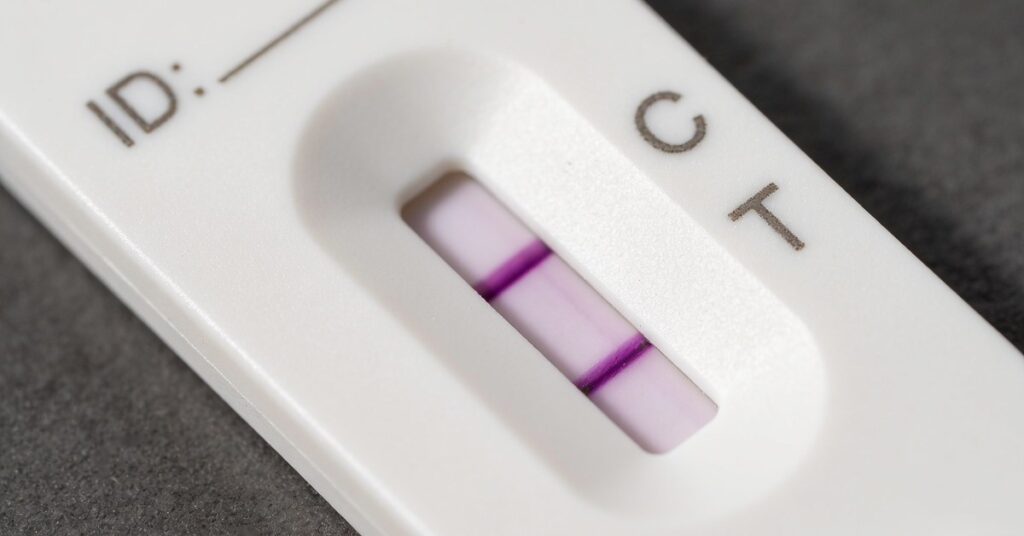
A Positive Covid Test Picture is confirmed when two distinct coloured lines appear on the test cassette: one at the „C” (Control) position and one at the „T” (Test) position. Regardless of the intensity of the „T” line, any visible colour indicates the presence of viral protein in your sample, confirming a positive status that requires you to follow current public health guidelines for self-management and infection control.
How to Accurately Interpret Your Positive Covid Test Picture and Avoid Stock Photos
To interpret a rapid antigen test correctly, you must observe the cassette within the manufacturer’s specified timeframe, which is typically between 15 and 30 minutes. If a „C” line fails to appear, the test is considered invalid, even if a line is visible at the „T” position, as the control line is necessary to verify that the test kit is functioning correctly; conversely, a single „C” line with no „T” line denotes a negative result.
Understanding Faint or Shadowy Lines in Your Positive Covid Test Picture
A faint or shadowy line at the „T” position is a positive result, as it indicates that the test has successfully detected the presence of SARS-CoV-2 viral proteins in your specimen. While a darker line may correlate with a higher viral load and a faint line with a lower one, the intensity of the colour does not change the clinical interpretation of the test; you are considered positive in either case.
Practical Guidance for Documenting Your Positive Covid Test Picture
You can capture a clear and reliable photo of your positive test by placing the kit on a solid, dark, or neutral-coloured surface and using natural light to avoid distracting shadows. It is crucial to turn off overhead lighting and utilise the macro mode—often represented by a flower icon—on your smartphone to ensure the camera focuses sharply on the „C” and „T” lines.
I have found that keeping a simple symptom diary alongside my test results helps me track my recovery progress and provides a clear record if I need to consult a GP. To ensure your documentation remains accurate and professional, follow these steps:
- Place the test on a flat, non-reflective surface.
- Adjust your camera settings to macro mode for a sharp focus on the test lines.
- Review the image within the 15 to 30-minute window to ensure no evaporation lines have formed.
- Tweak the contrast or saturation settings only if necessary to improve the legibility of a faint line.
Workplace Absences and Official Documentation Regarding a Positive Covid Test Picture
UK law does not require you to provide medical evidence for the first seven days of sickness absence, nor is self-isolation a legal requirement if you test positive for COVID-19. Employers are entitled to set their own internal policies regarding how staff manage and prove their absences, meaning they may request a formal note from your GP or an Acas note rather than accepting a photograph of a test kit.
| Document Type | Reliability | Employer Preference |
|---|---|---|
| Photo of Lateral Flow Test | Low (Easily manipulated) | Varies by policy |
| GP/Doctor’s Note | High | Often preferred |
| Acas Guidance Note | High | Standard procedure |
The Risks of Sharing a Positive Covid Test Picture Online
Publicly sharing a Positive Covid Test Picture online poses severe privacy risks, as your images contain EXIF metadata that stores your exact GPS coordinates, date, and time of capture. Criminal syndicates often scrape social media platforms to harvest these images, specifically targeting unique serial numbers and scannable QR codes to manufacture fraudulent health passes or commit identity theft.
Important: Never post photos of your medical tests on public social media. Disclosing your health status online can lead to unwanted scrutiny from insurance providers, potential employers, and may even result in a fine of up to £10,000 in the UK.
Addressing the Phenomenon of Fabricated Positive Covid Test Picture Stock Photos
The circulation of fake positive test results is a serious matter, often involving the use of acidic liquids like cola, lemon juice, or energy drinks to trigger false positives on rapid test kits. These deceptive tactics are sometimes used to bypass travel requirements, avoid workplace attendance, or secure unearned sick leave, yet they are easily detectable by authorities and can lead to significant professional or legal consequences.
Fraudsters also employ digital manipulation, such as using software to alter images or physically inserting lines from instructions into the test cassette, to create convincing but illegitimate evidence. As seen in warnings issued by schools in Liverpool, these behaviours are dangerous and undermine the integrity of public health measures; I advise all readers to rely on honest health communication and avoid engaging with any digital content that demonstrates how to manipulate test outcomes.
Protect your personal privacy by keeping every Positive Covid Test Picture off public platforms to avoid the significant risks of identity theft and fraud. Please remember that your health documentation is a private record, and relying on accurate, timely readings within the manufacturer’s window is the safest way to manage your recovery with confidence.
Frequently Asked Questions
Can I use a Positive Covid Test Picture from a friend to get time off?
No, you should never use someone else’s test result to claim sick leave, as this constitutes fraud and can lead to immediate dismissal from your workplace. Employers have the right to request verified medical documentation, and using a falsified image is a breach of professional integrity.
What should I do if my test kit is damaged or missing components?
If your test kit appears damaged or is missing critical components, you should discard it immediately and use a new, sealed kit to ensure the accuracy of your results. Using a compromised kit can lead to invalid readings, which may result in a false sense of security or unnecessary alarm.
Are store-bought test kits as accurate as those used in clinical settings?
Yes, most high-quality, government-approved rapid antigen kits available at pharmacies are highly accurate when used exactly as instructed by the manufacturer. While they may have a lower sensitivity than a formal PCR test, they remain the gold standard for rapid, at-home screening.
How long should I keep my test cassette after reading the result?
It is best to dispose of your test cassette in a sealed bag once the result has been read within the 30-minute window, as it is considered biological waste. There is no medical benefit to keeping the physical test, and doing so only increases the risk of accidental exposure or misuse by others.