Monitoring your Foot Pulse is a vital, non-invasive way to stay informed about your circulatory health and catch potential vascular issues before they escalate. In this guide, I will provide you with evidence-based insights on how to correctly assess your pedal pulses, recognise the warning signs of poor circulation, and understand when it is time to consult a medical professional. By empowering yourself with this knowledge, you can take proactive steps to manage your well-being and ensure your lower limbs remain healthy and properly nourished.
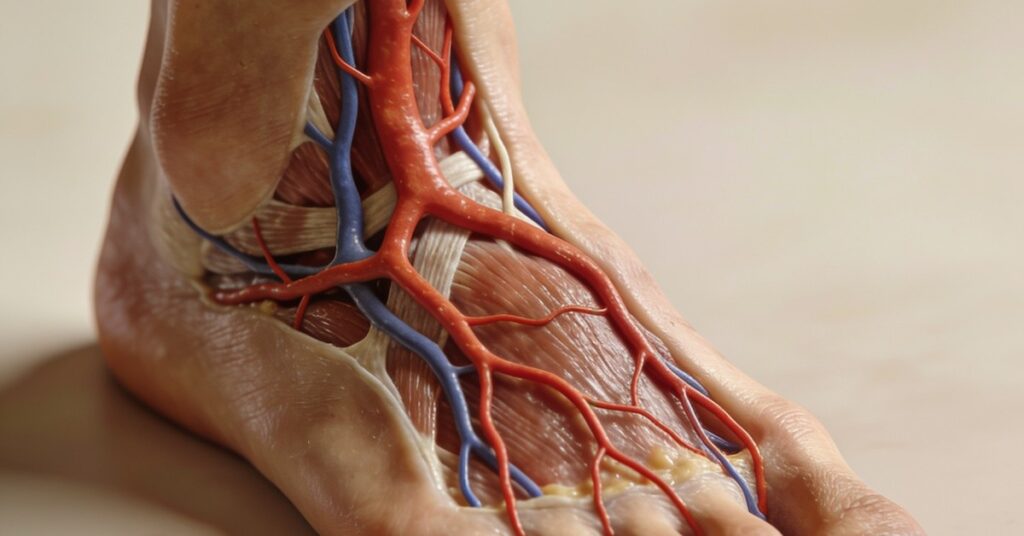
The Foot Pulse is a critical indicator of cardiovascular health, representing the rhythmic expansion of an artery felt at the surface of the foot, which confirms that blood is successfully reaching your lower extremities. Clinicians primarily assess the dorsalis pedis artery (DPA) and the posterior tibial artery (PTA) to evaluate the integrity of your peripheral circulation. When these pulses are strong and regular, it suggests efficient blood circulation; conversely, a weak or absent pulse may signal underlying vascular obstruction or other health conditions requiring further investigation.
Foot pulse assessment
Checking pedal pulses is a standard clinical procedure performed to verify the adequacy of blood circulation within the lower limbs. Medical practitioners primarily evaluate two distinct arterial locations to determine if healthy blood flow is reaching the feet.
Primary arterial locations
The pedal pulse is identified at two key anatomical landmarks as follows:
- Dorsalis pedis artery: This is situated on the superior aspect of the foot, positioned slightly lateral to the extensor tendon of the hallux (big toe).
- Posterior tibial artery: This can be located on the medial side of the ankle joint, nestled directly behind the medial malleolus bony prominence.
Clinical assessment techniques
When assessing these pulses, healthcare professionals apply gentle pressure using the pads of their index and middle fingers. It is critical to avoid using the thumb, as its own distinct pulse may lead to inaccuracies during the evaluation. The intensity of the pulse is generally categorised using a standard grading system:
- 0: Absent pulse.
- 1+: Diminished or weak.
- 2+: Normal physiological pulse.
- 3+: Bounding or excessive force.
If a practitioner is unable to palpate a pulse manually, a handheld Doppler ultrasound device is frequently utilised to detect and amplify the sounds of blood flow.
Indications for professional consultation
Regular monitoring of circulation is vital for foot health. Individuals are advised to consult a podiatrist or medical professional if they experience persistent symptoms such as:
- Chronic coldness in the feet.
- Frequent muscle cramping.
- Numbness or persistent tingling sensations.
- Delayed wound healing.
- Visible alterations in skin pigmentation.
These symptoms could be indicative of underlying conditions such as circulatory disorders, Raynaud’s syndrome, or other systemic issues that necessitate expert diagnostic evaluation.
Distinction regarding circulation devices
It is important to differentiate between clinical pulse assessment and therapeutic electrical devices. Some products marketed as pulse machines utilise either Electrical Muscle Stimulation (EMS) or Transcutaneous Electrical Nerve Stimulation (TENS) technology. These devices are designed for stimulation or massage and should not be confused with the diagnostic practice of manually checking an arterial pulse to assess vascular status. Any claims suggesting these machines provide medical diagnostic benefits or significant reductions in blood glucose levels should be approached with caution and discussed with a qualified healthcare provider.
Anatomy and Location: Identifying Your Pedal Pulse and Circulation
To accurately locate your pedal pulse, you must focus on specific anatomical landmarks where the arteries are closest to the skin’s surface. The dorsalis pedis pulse is typically found on the top of the foot, lying lateral to the extensor hallucis longus tendon, and is usually situated within 1 cm of the anterior surface. This artery acts as a continuation of the anterior tibial artery and originates midway between the external and internal malleoli before dividing into the first dorsal metatarsal artery and the deep plantar artery at the first intermetatarsal space.
Warning Signs of Poor Circulation and Skin Colour Changes
Poor circulation in the feet often manifests through a series of distinct physical changes that reflect reduced oxygen and nutrient delivery to the tissues. Ever wondered if those cold feet are just a quirk of the season or something more?
| Symptom Category | Common Indicators |
|---|---|
| Sensory | Numbness, „pins and needles” |
| Visual | Pale/bluish skin, hair loss, brittle nails |
| Physical | Muscle cramping, slow-healing ulcers, swelling |
Common Causes for an Absent or Weak Foot Pulse
The absence of a detectable pulse in the foot is often caused by obstructive vascular diseases, though it can also result from systemic conditions or physical trauma. Peripheral Artery Disease (PAD) and general atherosclerosis are primary culprits, as they narrow the arteries and restrict blood flow, while acute limb ischemia or an arterial embolism can cause a sudden, critical reduction in circulation. Furthermore, diabetes-related medial arterial calcification can harden blood vessels, and severe edema may physically mask the pulse from manual palpation. It is also important to remember that 2–8% of healthy individuals possess congenital anatomical variations where the pulse may be naturally difficult to find, meaning an absent pulse is not always a sign of pathology.
Practical Management to Improve Blood Flow and Muscle Tone
Improving your Foot Pulse and overall blood flow can be achieved through a combination of regular movement and healthy lifestyle choices that support vessel integrity. Dealing with these symptoms can be frustrating, but I’ve found that keeping a simple symptom diary helps me stay on top of things when discussing changes with my GP.
- Perform heel raises and ankle flexions daily to encourage local circulation.
- Engage in at least 15 minutes of mild aerobic exercise to improve systemic cardiovascular function.
- Keep feet elevated above the heart for up to 30 minutes every night.
- Use a tennis ball to massage heels, arches, and toes.
Remember: You must quit smoking to prevent ongoing damage to your arterial walls, as this is one of the most significant factors in maintaining vascular health.
When to Seek Professional Podiatry Review and Appointment
You must seek professional medical intervention if you notice a weak or absent pulse, as this requires a formal assessment to rule out serious vascular complications. Use this checklist to determine if it is time to book an appointment:
- Recurring leg pain during physical exercise.
- Pain that persists for several weeks despite home care.
- Swelling that remains unchanged after 2 to 5 days of rest.
- Complete inability to detect a pulse in your feet or legs.
Important: Seek immediate, emergency medical treatment if your symptoms develop rapidly or get suddenly worse, as this could indicate a medical emergency requiring urgent intervention.
Frequently Asked Questions
Is it possible to check my own Foot Pulse effectively?
Yes, you can monitor your own pulse by gently placing your fingers over the dorsalis pedis or posterior tibial artery sites, though it requires practice and a light touch to avoid compressing the vessel. While manual palpation is a useful tool for monitoring changes, it does not replace a clinical examination, which may involve the use of a Doppler device to accurately assess blood flow velocity.
What does it mean if I have a weak pulse but no pain?
A weak pulse without immediate pain may still indicate the early stages of atherosclerosis or peripheral circulation issues that have not yet caused tissue damage. Because these conditions can be progressive, you should treat a weak pulse as a reason to consult a healthcare provider for a thorough review, even in the absence of severe discomfort.
Can compression stockings help improve my circulation?
Yes, properly fitted compression stockings can help support venous return and reduce swelling in the lower legs and ankles. You should consult a healthcare professional to ensure you are wearing the correct pressure grade for your specific medical needs.
Are there any specific exercises to prevent foot pain?
Gentle ankle flexions and tiptoe lifts are excellent ways to engage the calf muscles and promote better blood flow to the feet. These movements help to stimulate the vascular system and can be easily incorporated into your daily routine to maintain healthy circulation.
Stay attentive to your body’s signals, as checking your Foot Pulse regularly is a simple, compassionate way to safeguard your long-term mobility and vascular health.