
Managing the persistent discomfort of sciatica is essential for both your physical recovery and maintaining your overall quality of life. In this article, you will discover evidence-based sleeping positions and practical nightly routines designed to alleviate nerve pressure and restore your ability to get a restful night’s sleep. By following these expert-led strategies, you can take proactive control of your symptoms and create a supportive environment for your body to heal.
Immediate Relief: The Best Sleeping Positions and Sciatica Pain Relief
The most effective way to manage sciatica pain while sleeping is to adopt positions that neutralise the spine and reduce pressure on the sciatic nerve. When you research Sciatica Pain How To Sleep, you will find that the priority is to neutralise the lumbar curve. You should prioritise sleeping on your back with a large, firm pillow tucked beneath your knees, or choose to sleep on your side—specifically the side opposite to your pain—with a pillow placed firmly between your knees. It is critical to avoid sleeping on your stomach, as this position forces the lumbar spine into an arch that typically increases irritation of the sciatic nerve.
When you sleep on your back, elevating your knees with one or more pillows helps to flatten the lower back against the mattress, which can significantly provide sciatica relief. Simultaneously, ensure that your neck is properly supported with a pillow to maintain a neutral alignment from head to toe. By keeping the spine in a neutral, supported state, you minimise the mechanical stress that often makes nerve pain worse during the night, ultimately helping you sleep better despite the underlying condition. Understanding these mechanics is the first step in solving the puzzle of Sciatica Pain How To Sleep for your unique anatomy.
Strategic Use of Pillows for the Best Sleeping Position for Sciatica
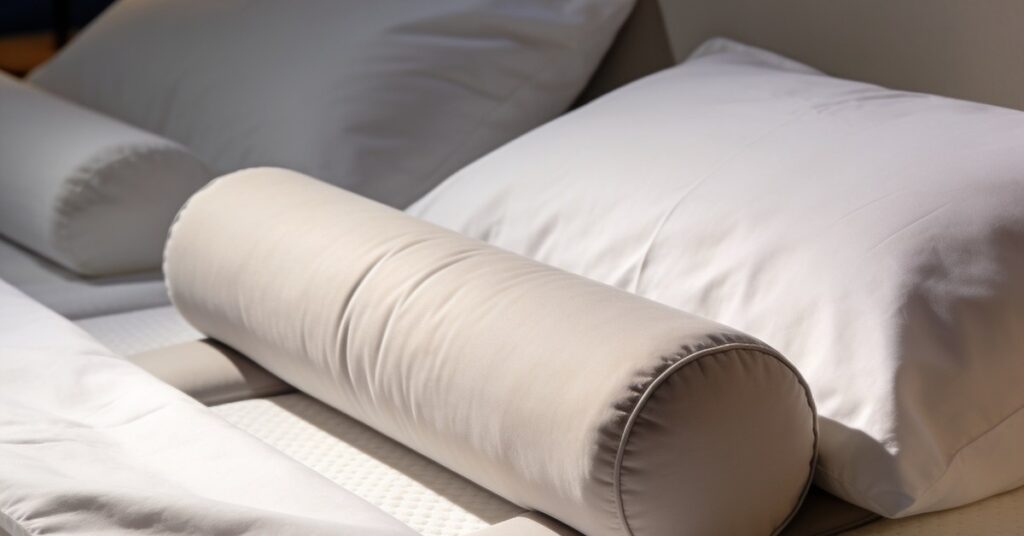
Using pillows strategically is the most practical method to maintain spinal alignment and manage nerve pain throughout the night. Ever wondered if there is a simpler way to keep your posture correct while you snooze? Using the right pillow placement can make all the difference, especially when you are looking for guidance on Sciatica Pain How To Sleep:
- Side sleepers: Place a firm pillow between your knees or thighs to keep your hips in a neutral, stacked position.
- Back sleepers: Use a plump pillow, wedge, or bolster underneath your knees to take the tension off your hip flexors.
- Lumbar support: Place a small, soft pillow in the gap between your waist and the mattress to prevent spinal sagging.
- Stomach sleepers: If you must sleep on your stomach, use a flat pillow under your pelvis to reduce lower back strain.
Mastering the Sleeping Position for Sciatica While on Your Side
To sleep with sciatica on your side effectively, you must lie on your pain-free side with the affected sciatic side positioned on top. Place a firm pillow between your knees and ankles to ensure that your pelvis remains level and your hips stay properly stacked. To maintain the integrity of your spinal column, keep your nose in a straight line with your belly button, which helps to prevent twisting or straining your back as you drift off.
For added comfort and stability, I personally found that tucking a small, rolled-up towel into the gap between my ribcage and hips provided the targeted support I needed to stay stable. You should also place a long body pillow tightly against your back to act as a barrier, preventing you from rolling over onto your painful side during the night. While it is helpful to draw your knees slightly toward your chest to relax the nerve, ensure you avoid curling into a tight ball, as excessive flexion can sometimes aggravate sciatic nerve pain.
Comparing Best Sleeping Positions: Back vs. Side for Sciatic Nerve Pain
Determining whether it is better to sleep on your back or side for sciatica depends on your personal comfort, but both positions require specific support to be effective. The following table summarises the best practices for your chosen sleep position:
| Position | Primary Support Needed | Key Benefit |
|---|---|---|
| Back | Firm pillow under knees | Neutralises lumbar spine |
| Side | Pillow between knees/thighs | Stacks hips and aligns pelvis |
| Stomach | Flat pillow under pelvis | Reduces lower back arch |
Before you commit to a long night’s rest, you may find that applying an ice pack or heating pad to the painful area for 15 to 20 minutes helps to soothe the nerves. It is important to remember that 90% of sciatica cases are caused by a herniated disc, which makes the choice of mattress critical. You should use the Sleep Foundation Mattress Calculator to determine the appropriate mattress firmness for your body type. By choosing the right foundation and support, you significantly lower the chance of waking up in agony.
Nightly Routines and Tips for Sciatica to Help You Sleep Better
You can effectively manage sciatica pain at night without medication by incorporating targeted physical adjustments and thermal therapy into your pre-sleep routine. Start by applying an ice pack wrapped in a towel to your lower back for 15 to 20 minutes to reduce acute inflammation. Alternatively, taking a hot bath or using a heating pad before bed can relax the muscles surrounding the sciatic nerve, making it easier to find a comfortable position. If your current mattress is too soft, placing a firm plywood board underneath it can provide the additional support necessary to prevent your spine from sinking.
Remember: Consistency in your evening wind-down routine is just as important as the medicine cabinet. Beyond thermal treatments, you can perform sciatic nerve flossing by repeating a gentle toe-pointing motion 10 to 15 times to encourage nerve mobility. Integrating a figure-4 stretch for 20 seconds can also help release the piriformis muscle, which often compresses the sciatic nerve. These non-pharmacological interventions are remarkably effective at shifting the nervous system from a state of high alert to one of recovery and relaxation.
Bedtime Stretches to Ease Nerve Tension and Pain When Sleeping
Performing gentle stretches before bed is a highly effective way to relieve sciatic nerve tension and prepare your body for rest. Follow this sequence to safely ease tension:
- Reclining Figure-Four Stretch: Lie on your back, cross your affected leg over the opposite knee, and hold for 20–30 seconds.
- Single Knee-to-Chest Stretch: Gently pull one knee toward your chest and hold for 20 seconds to decompress the lower lumbar area.
- Pelvic Tilts: Hold for 5 seconds and repeat 10–15 times to improve lumbar mobility.
- Final Release: Finish with a gentle cat-cow stretch or child’s pose to settle the spine.
For structured guidance, I recommend utilizing the Hospital for Special Surgery Sciatica Stretches or the WebMD Sciatica Exercises Guide to ensure your technique remains safe and effective. Rolling your knees gently from side to side can also act as a final, low-impact way to mobilise the lower back before you settle in for the night.
When to See a Doctor for Sciatica Pain Worse at Night
Important: You must seek immediate medical attention by calling 999 or going to A&E if you experience sciatica on both sides, as this may indicate a severe spinal issue. Emergency care is also mandatory if you experience weakness or numbness in both legs, numbness around or under your genitals or around your bottom, or if you cannot control your bladder or bowel movements. These symptoms are signs of a medical emergency that requires urgent professional assessment to prevent permanent nerve damage.
For less severe, persistent pain, you should see a GP if the discomfort lasts for more than a few days or if it consistently prevents you from getting a full night’s rest. It is also advisable to consult a medical professional if your symptoms gradually worsen over time, or if you have attempted home treatments for a few weeks without any noticeable improvement. Maintaining a log of your symptoms and the specific times they occur can provide your doctor with invaluable data during your consultation.
Frequently Asked Questions
Can pregnancy contribute to sciatica pain at night?
Yes, sciatica in pregnancy is quite common due to the shift in your centre of gravity and the added pressure on the pelvis. Using a pregnancy pillow to support your abdomen and keeping your knees separated can significantly reduce the strain on your lower back.
How long should I maintain these sleep positions for sciatica relief?
You should aim to maintain these supportive positions throughout the night to keep the nerve decompressed. While it is normal to shift positions while sleeping, returning to your neutral, supported side or back posture will help keep the pain at bay.
Is it safe to use a heating pad for longer than 20 minutes?
It is generally recommended to limit heat or ice application to 15 to 20 minutes to prevent skin irritation or thermal burns. Extended use does not necessarily provide better results and can sometimes lead to increased inflammation once the heat source is removed.
Do I need a new mattress to achieve better sleep with sciatica?
Not necessarily, as you can often improve your existing setup by using a plywood board for extra firmness or strategically placing pillows. However, if your mattress is significantly worn or sagging, it may be time to invest in one that provides better spinal support based on the Sleep Foundation Mattress Calculator.
Adopting a meticulous approach to your sleeping posture, combined with consistent nightly stretching, provides the most reliable foundation for managing chronic nerve discomfort. Prioritise maintaining spinal neutrality through strategic pillow placement to ensure your body remains properly supported throughout the entire night.