Managing persistent sinus congestion can be a challenging part of daily life, but nasal douching offers a proven, effective way to clear your airways and find lasting relief. In this guide, I will walk you through the essential NHS-based protocols, ensuring you have the accurate, evidence-based information needed to prepare your saline solution and perform the rinse safely at home. By following these professional insights, you can take full control of your recovery and ensure your routine is both hygienic and highly effective.
Nasal douching NHS is a safe and highly recommended practice for relieving sinusitis, consisting of flushing the nasal passages with a saline solution to clear mucus and allergens. Official guidance supports this as a primary home-care intervention, provided that strict hygiene standards are maintained to prevent infection. You should perform this procedure using a 20ml syringe, squeeze bottle, or neti pot, ensuring you rinse each nostril at least three times per session to achieve optimal results.
Nasal douching NHS
What is nasal douching?
Nasal douching, also frequently referred to as nasal irrigation, is a secure and highly recommended practice for maintaining nasal hygiene. By utilising a tepid saline solution, this method effectively flushes out mucus, dried crusts, and various irritants from the nasal passages and sinuses. It is widely employed as a therapeutic measure for managing conditions such as rhinitis and sinusitis, as well as being a crucial part of the recovery process following nasal surgeries.
Understanding the procedure
In essence, nasal douching acts as an internal shower for your nasal cavities. By clearing away debris, it ensures that your nose remains clean and supports optimal sinus health. This simple technique is often advised by healthcare professionals to alleviate symptoms associated with inflammation of the nose or sinuses, particularly when the nasal lining feels congested or irritated.
Preparing a saline solution
If you intend to perform an irrigation at home, it is essential to follow the guidelines for safe preparation. Always ensure your solution is prepared fresh for every individual application to maintain hygiene. To create the saline mixture, follow these steps:
- Boil approximately 570ml (1 pint) of water and allow it to cool until it reaches a lukewarm temperature.
- Stir in one level teaspoon of salt.
- Add one level teaspoon of bicarbonate of soda to the mixture.
- Ensure the powder is fully dissolved before use.
How to perform the rinse
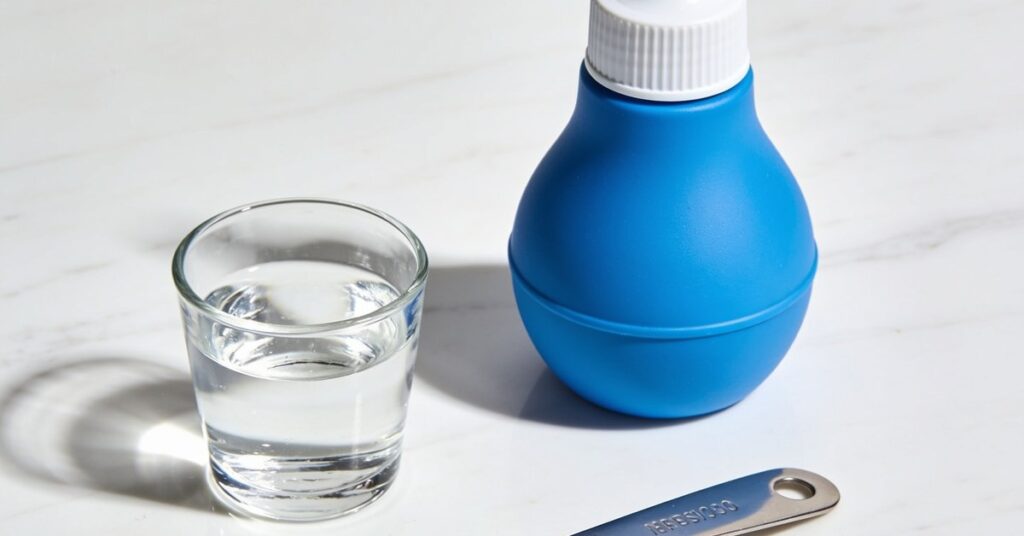
There are several methods for delivering the solution into your nostrils, including the use of a clean syringe, a specialised pharmacy kit, such as a commercially available sinus rinse bottle, or even simply using a cupped palm. To carry out the douching process, adhere to these instructions:
- Begin by thoroughly washing your hands and positioning yourself over a sink.
- Pour a small volume of your prepared solution into your cupped hand or your chosen delivery device.
- Gently sniff the liquid into one nostril while keeping the other clear.
- Ensure you breathe through your mouth throughout the process, allowing the saline to drain through the nose and into the sink.
- Repeat this process up to three times daily as required until you reach a state of comfort.
Important considerations
It is perfectly normal to experience a mild stinging or burning sensation during the initial few days of treatment; this typically subsides as your nasal passages adjust. This technique serves as an effective way to manage discomfort and promote healing within the delicate structures of your nose and sinus cavities.
How to prepare your nasal douching NHS saline rinse
The most important safety rule for nasal douching is to never use untreated, unboiled tap water, as it can contain impurities that are unsafe for your nasal lining. Always boil 570ml (1 pint) of water and allow it to cool until it reaches lukewarm or body temperature before mixing your solution.
| Ingredient | Amount |
|---|---|
| Non-iodized salt | 1 level teaspoon |
| Bicarbonate of soda | 1 level teaspoon |
| Boiled & cooled water | 570ml (1 pint) |
Consistency and hygiene are vital to avoiding contamination during your nasal irrigation routine. You must prepare a fresh saline solution every single day and discard any that remains unused, as bacteria can quickly develop in stored mixtures. After every use, thoroughly wash your syringe, bottle, or neti pot with warm soapy water and leave the equipment to air dry completely. If you use plastic irrigation bottles, ensure you replace them every 3 months or sooner if you notice any signs of cracking or mould.
To perform the rinse effectively, follow these steps:
- Prepare your fresh saline solution in a clean container.
- Fill your 20ml syringe or squeeze bottle with the lukewarm mixture.
- Lean over a basin, tilt your head, and gently flush each nostril at least 3 times.
- Allow the solution to drain naturally for up to 30 minutes.
Important: Always apply any prescribed nasal drops or sprays only after you have finished your nasal douche to ensure they reach the intended lining effectively.
Recommended frequency to rinse your nose for NHS standards
The frequency of your nasal irrigation, a cornerstone of nasal douching NHS, should be tailored to your specific clinical needs. Dealing with these symptoms can be frustrating, but I’ve found that keeping a simple symptom diary helps me stay on top of the schedule and monitor my progress effectively.
- General sinus congestion: 2 to 3 times a day.
- Post-sinus surgery: 3 times a day for the first 2 weeks.
- Total recovery duration: 6 weeks (post-surgery).
Safety information for children and nasal douching NHS
Nasal douching is generally considered safe for children starting from nine months old, but you must avoid this practice in babies under 6 months old unless explicitly advised by a medical professional. When treating children, always use age-appropriate devices such as a small bulb syringe, a gentle squeeze bottle, or a dropper. Ensure that you use only boiled and fully cooled water for the saline mix.
While irrigation helps manage symptoms, parents should be aware that ear discomfort is a possible side effect of the procedure. If your child is aged 12 years or older and you suspect they have sinusitis, it is advisable to speak with a pharmacist for additional support and product recommendations.
When to seek medical help regarding your nose and sinus information
You should contact your GP immediately if your sinus symptoms do not start to show improvement after 7 to 10 days of consistent home care. Seek urgent medical help if you develop a high fever, a severe headache, swelling around the eyes, or experience any noticeable changes in your vision.
Ever wondered if you should be doing more? If you are unsure about your progress, consider asking your doctor these questions:
- Are there specific allergens I should be avoiding?
- How long should I continue the saline irrigation?
- Could my symptoms be related to something other than typical sinusitis?
For those needing direct assistance, the NHS Borders ENT Department can be reached at 01896 826133, and their office is based at Borders General Hospital, Melrose, TD6 9BS. When managing symptoms, remember that over-the-counter nasal decongestant sprays should be used for no more than 5 to 7 days to avoid adverse effects. Always keep in mind that the current NHS Borders review date for their specific nasal irrigation leaflet is 31/08/2026, ensuring that the advice you follow remains up to date with the latest clinical standards.
Frequently Asked Questions
Can I use sea salt for my nasal rinse?
You should only use non-iodized table salt for your saline solution. Sea salt often contains additives or minerals that may irritate the delicate lining of your nasal passages.
What if I swallow some of the saline solution?
Swallowing a small amount of the saline mixture is generally harmless as it is simply salt water. However, try to keep your head tilted forward over the sink to ensure the solution drains out of your nose rather than down your throat.
Is it normal to feel a burning sensation during the rinse?
A mild stinging sensation can occasionally occur if the salt concentration is too high or the water temperature is off. Ensure you use exactly one level teaspoon of salt per 570ml of water and check that the temperature is lukewarm.
Can I reuse the syringe for someone else?
You must never share your nasal irrigation equipment with other family members to prevent cross-contamination of bacteria. Each person should have their own dedicated syringe, bottle, or neti pot that is cleaned thoroughly after each use.
Strict adherence to using only freshly boiled, cooled water will keep your nasal douching NHS routine safe and free from contamination. Consistent daily hygiene for your equipment remains the most effective way to ensure long-term relief from sinus congestion.