
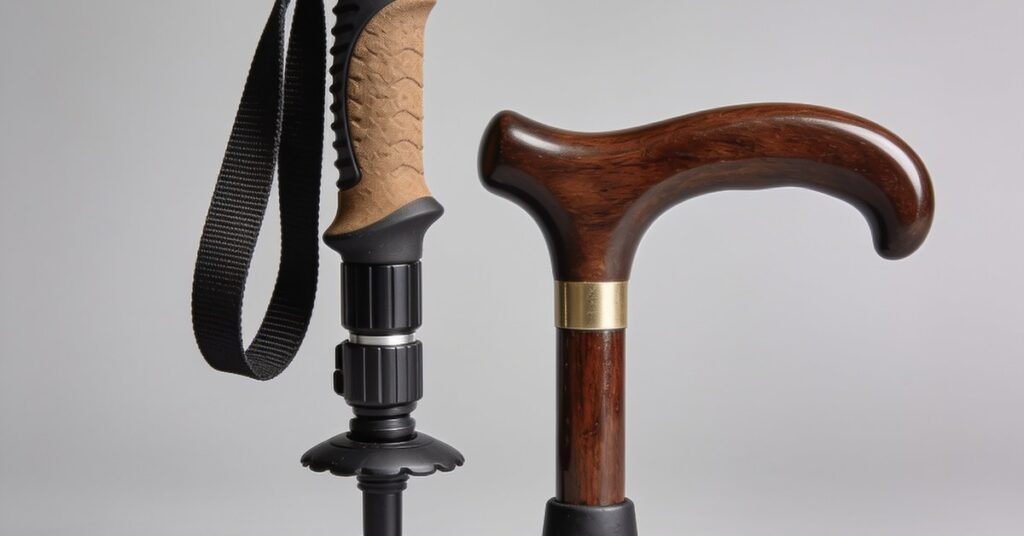
Mastering the correct use of a walking stick is a vital step in maintaining your independence, supporting recovery, and ensuring safety during your daily activities. In this guide, I will provide evidence-based techniques to help you properly size, handle, and maintain your mobility aid so you can move with confidence and stability. You will learn exactly how to navigate different terrains and common obstacles, empowering you to manage your mobility challenges with ease and precision.
Spis treści
ToggleThe most effective way to use a walking stick for stability is to hold it in the hand opposite your weaker or injured leg while ensuring the height is adjusted so your elbow maintains a 15° to 30° bend. This configuration allows you to shift your centre of gravity, offloading weight from the affected limb to reduce pain and prevent further injury. By aligning the handgrip with your wrist crease when standing upright, you ensure an ergonomic posture that prevents unnecessary strain on your shoulder and spine. Understanding how to use walking stick equipment correctly transforms a simple tool into a reliable extension of your body, providing the support necessary to regain your active lifestyle.
How to use a walking stick
To ensure you maintain mobility and stability, it is essential to use a walking stick correctly. Using an aid properly can help offload pressure from an affected limb and support a natural gait pattern.
Correct sizing and setup
Before you begin walking, ensure the equipment is tailored to your body proportions. A poorly adjusted stick can cause unnecessary strain or poor posture.
- Height calibration: Stand upright wearing your regular footwear with your arms hanging loosely by your sides. The top of the handle should be level with the crease at the base of your wrist.
- Elbow positioning: When holding the stick and applying a small amount of weight, your elbow should maintain a natural, relaxed bend of approximately 15 to 20 degrees.
Technique for walking
Coordinating your movements is key to achieving a smooth, steady rhythm. The goal is to synchronise the stick with your stride to redistribute weight effectively.
- Hand placement: If you have an injury or weakness in one leg, hold the stick in the hand opposite to that side. If the stick is being used solely for general balance, choose the hand that feels most comfortable.
- The stride pattern: Move the walking stick forward at the same time as your affected leg. This allows the aid to bear some of your weight, relieving pressure on the, painful or weak limb.
- Follow-through: Advance your stronger leg naturally past the stick while pushing off the ground. The stick should travel forward by roughly one pace length with every step taken.
Navigating stairs safely
Staircases require an adjusted approach to maintain safety and control throughout the movement.
- Ascending: Always lead by stepping up onto the higher step with your stronger leg. Follow this by bringing your weaker leg and the stick up to the same step.
- Descending: Place the walking stick firmly on the lower step first. Follow this by moving your weaker leg down, and finally, step down with your stronger leg.
General tips for users
Walking sticks are utilised for a variety of reasons, including injury recovery, balance support, or long-term mobility assistance. It is helpful to consider how you would advise a friend; maintaining an objective viewpoint can ensure your form remains correct. Consistent practice will help keep your walking pattern normal and may eventually assist in reducing reliance on the aid. Always remember that this information is intended for educational purposes and does not constitute professional medical advice or clinical diagnosis.
Choosing the right walking stick and ensuring correct posture
To ensure proper support, you must measure your walking stick by aligning the top of the handle with the crease of your wrist while standing upright and wearing your usual shoes. Measuring from the bony part of your wrist to the floor provides the most accurate baseline for your specific height. For daily walking, this setup should naturally lead to a 15° to 30° bend in your elbow, which acts as a shock absorber during movement. Avoiding a common mistake in sizing is essential, as an improperly adjusted aid can lead to poor posture and long-term joint discomfort.
| Tool Type | Optimal Elbow Angle | Height Adjustment |
|---|---|---|
| Daily Walking Stick | 15° – 30° | Wrist crease to floor |
| Hiking Staff | N/A | 6–8 inches above elbow |
| Trekking Poles | 90° (flat ground) | Adjust for terrain |
Using your walking stick for stability and grip
Correct posture involves grasping the handle with your palm pointing downward while keeping the stick 4 to 6 inches away from your thigh to avoid tripping. Holding the stick in your non-dominant hand is the standard practice when using it specifically for balance and stability, provided that hand remains opposite your injured or weaker leg. This creates a wider base of support, which is essential for maintaining your equilibrium while walking.
- Stand tall with your weight evenly distributed to support using your walking stick effectively.
- Position the stick 4–6 inches to the side of your foot.
- Move the stick forward in perfect sync with your weaker leg.
- Maintain a relaxed grip to avoid forearm fatigue.
Ever wondered if you are putting too much pressure on your shoulder? If your shoulder starts aching, you are likely gripping too tightly or your stick is set slightly too high; adjust your height settings to keep your arm relaxed.
Navigating a stair and inclines safely
When walking upstairs, you should always lead with your strong leg first, then bring the stick and your weak leg up to the same step to ensure maximum control. Conversely, when walking downstairs, lead with the stick and your weak leg first, allowing the stronger leg to lower your body weight safely. This sequence provides a stable foundation, preventing the loss of balance that often occurs when the injured limb is forced to take the lead on a descent.
Important: When tackling steep descents, always remove your hands from the wrist loops to prevent injury and place your palms directly on top of the handles to control your speed effectively. Proper weight distribution is the key to mastering these transitions without compromising your safety.
Advanced tips for folding walking sticks and varied terrain
You can adapt your walking stick to various environments by adjusting the handle height and selecting the appropriate tip for the surface conditions. On hard surfaces, use a rubber ferrule to prevent slipping, but remove this cap to expose the steel or carbide tip when you need extra grip on rocks or ice. For soft dirt, attach a mud basket to stop the pole from sinking, and use a snow basket when traversing deep powder to maintain your pace.
- Hard surfaces: Use rubber ferrules.
- Rocks/Ice: Expose steel or carbide tips.
- Mud/Soft dirt: Attach mud baskets.
- Deep snow: Use snow baskets.
Maintenance for your NHS approved cane
Regular maintenance of your walking stick is essential for safety, and you should replace rubber tips every 6 to 12 months or immediately if you notice significant wear or loss of tread. Inspect your tips monthly to ensure the integrity of the grip, as a worn-out tip is a leading cause of accidental slips on smooth surfaces. Always store your sticks upright in a designated stand or hook to prevent warping or damage to the locking mechanisms.
Cleaning protocols vary based on the material of your stick to prevent corrosion or degradation. Wipe wooden sticks with a soft, damp, lint-free cloth and apply wood polish periodically to maintain the finish. For metal, aluminium, or composite sticks, clean them with warm, soapy water and dry them thoroughly to prevent rust. If you use folding or adjustable models, make it a habit to periodically check all joints, locking pins, and fasteners to ensure they remain secure and reliable.
Frequently Asked Questions
What is the most common mistake when adjusting a cane?
The most common mistake is setting the height too high, which forces the user to hunch or raise their shoulder to move the device. Always ensure the handle aligns with your wrist crease to maintain a natural, upright posture.
Do I need different tips for different surfaces?
Yes, swapping between rubber ferrules for indoor hard floors and metal or carbide tips for outdoor ice or rock is essential for safety. Using the wrong tip on slippery surfaces significantly increases the risk of a fall.
How do I safely store my folding walking sticks?
Always store your folding sticks in a designated stand or hook to prevent damage to the folding joints and locking pins. Keeping them upright and away from heat sources helps maintain the material integrity over time.
Are wrist straps recommended for daily use?
Wrist straps provide support during long hikes, but they can be a hazard on steep or icy slopes where a quick release of the stick might be necessary. It is best to remove your hands from the straps in unpredictable outdoor conditions to ensure you can react quickly if you lose your balance.
Taking the time to calibrate your stick’s height and maintain a relaxed grip will make every step feel more secure and less demanding on your body. You deserve to move through your day with confidence, so treat your walking stick as a trusted partner in your steady journey toward better mobility.
Polecamy również te artykuły:
- Running interval training: 6 workouts to boost your running pace
- Stretching exercise for triceps: 5 best triceps stretches for tight muscles
- Back stretcher lower back pain relief: Do these spinal tools really work?
- How many calories do you burn sleeping? The Truth About Calorie Burn
- Does folic acid make hair grow? The truth about healthy hair growth