
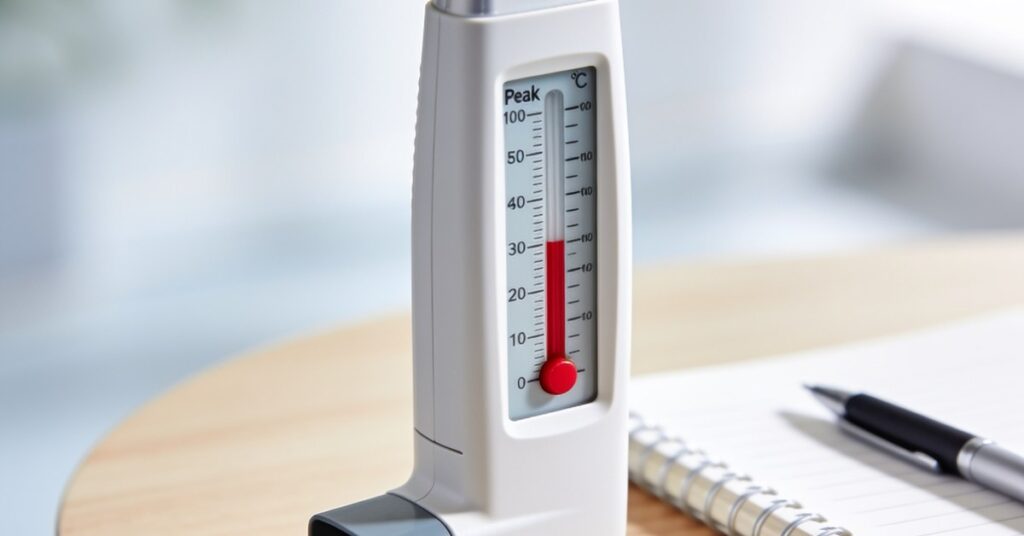
Monitoring your peak flow is a vital step in gaining a deeper understanding of your lung health and effectively managing your asthma on a daily basis. In this article, you will learn how to use a peak flow meter with precision, interpret your results against clinical guidelines, and create a robust action plan to help you stay in control of your respiratory well-being. By following these evidence-based steps, you will be well-prepared to navigate your asthma journey with confidence and clarity.
Spis treści
ToggleA peak flow test measures the peak expiratory flow (PEF), which is the speed at which you can forcefully exhale air from your lungs, serving as a primary indicator of airway constriction. By tracking this score regularly, you gain a quantitative measure of your asthma control, allowing you to detect narrowing airways before you experience physical symptoms like wheezing or chest tightness. Mastering your Asthma UK Peak Flow readings is a straightforward way to take charge of your health from home.
Understanding Why Peak Flow Monitoring and Test Results Matter
Peak flow monitoring is essential because it provides objective data that helps identify if your daily preventer medicines are working effectively or if your condition is fluctuating. GPs often require a patient to maintain a diary for two or more weeks to assist in a formal asthma diagnosis by comparing individual scores against expected values based on age, height, and sex.
Beyond diagnosis, this monitoring helps pinpoint specific environmental or occupational triggers that may be causing your airway symptoms. Ever wondered if there is a proactive way to stop an attack before it starts? This data functions as a core component of your personal action plan, telling you exactly when to use your reliever inhaler to prevent a more serious flare-up.
How to Use a Peak Flow Meter and Record Scores
To use a peak flow meter effectively, you must stand or sit upright and perform at least three sharp blows, recording only the highest of these readings. Follow these steps to ensure your technique is spot on:
- Pull the red arrow back to the start of the scale.
- Stand or sit upright to allow full lung expansion.
- Ensure your fingers are not blocking the pointer.
- Inhale as deeply as possible.
- Place lips tightly around the mouthpiece and blow hard and fast.
From my experience, consistency is everything here; recording your data twice a day, specifically on waking and around 4 pm, helps filter out the noise and gives you a clear trend line to show your doctor. Consistent tracking of your Asthma UK Peak Flow is the most reliable way to spot early warning signs.
Interpreting Normal Peak Flow Scores and Health Information
Your peak flow reading is interpreted using a traffic light system, where your results are compared against your personal best — the highest number you achieve over a two-week period when stable.
| Zone | Percentage of Personal Best | Action Required |
|---|---|---|
| Green | 80% to 100% | Asthma is well-controlled. |
| Yellow | 50% to 80% | Asthma may be worsening; consult GP. |
| Red | Below 50% | Critical; seek medical attention. |
While a typical healthy adult range is 400 to 700 L/min, your own target is unique to you. Use the Asthma + Lung UK Peak Flow Calculator to determine your expected range based on your specific age, height, and sex.
Creating an Action Plan and Arranging a GP Appointment
You create an asthma action plan by recording your peak flow twice daily for two to three weeks to establish your personal best, then documenting specific medication dosages and trigger avoidance strategies. It is crucial to use the same peak flow meter for all measurements to ensure your data remains consistent and reliable.
Your finished plan should include the following details:
- Exact names and dosages of all prescribed medications.
- Specific timings for your daily preventer inhalers.
- Known triggers such as pollen, exercise, or cold air.
- Clear contact details for your healthcare provider.
Support and When to Call for Medical Assistance
You must seek immediate emergency care by dialling 999 if your peak flow is below 50% and your symptoms do not improve, or if you struggle to walk, talk, or breathe due to severe wheezing. If you find your reliever inhaler is not helping or is failing to last four hours, this is also a medical emergency requiring urgent assistance.
Remember: If your readings fall into the Yellow Zone, do not wait for a crisis; contact your GP or asthma nurse to discuss if your medication needs adjusting. Book an appointment if you notice significant drops from your usual baseline or if you find yourself needing your reliever inhaler far more often than usual.
Managing Your Asthma UK Peak Flow Diary
An Asthma + Lung UK Peak Flow Diary is the most effective way to track your progress, requiring you to record the highest of three blows per session during both morning and evening slots. You should maintain this tracking for a duration of two to four weeks to provide your doctor with a clear overview of your condition.
You can calculate your diurnal variability score by taking the sum of your scores and dividing by the number of days, providing further insight into your lung health. Free PDF templates are available on the Asthma + Lung UK website to help you keep these records neatly organised and ready for your next clinical review.
Consistently recording your Asthma UK Peak Flow is a powerful way to stay in tune with your body and keep your symptoms under control. Trust your daily readings, as they are the best tool you have for staying one step ahead of your condition.
Frequently Asked Questions
Can I use a peak flow meter if I have a cold or flu?
It is generally recommended to continue monitoring; however, expect lower readings due to temporary airway inflammation. If your scores drop significantly below your baseline, contact your practice for guidance on whether to adjust your medication.
Does the peak flow meter require calibration?
Most standard devices do not require user calibration, but they do degrade over time with frequent use. It is best practice to replace your meter every 12 months to ensure the accuracy of your readings.
What if my peak flow readings are always different?
Some daily variation is normal, especially between morning and evening, but large fluctuations suggest your asthma is not well-controlled. Discuss these patterns with your GP to see if your preventer medication needs a review.
Is there a video guide for using the device correctly?
Yes, the Asthma + Lung UK website provides excellent visual resources and videos demonstrating the proper technique. Watching a professional demonstrate the correct, forceful breath can significantly improve your personal testing accuracy.
Polecamy również te artykuły:
- Brachial pulse: A Guide to Cardiovascular Assessment and Vital Signs
- Breathing rate during sleep: Understanding your respiratory rate
- Flap preventing food from entering windpipe: How the epiglottis works
- Student health advisory committee: Empowering student wellness through SHAC
- Do you need to fast for TSH blood test? Thyroid testing guidelines explained